The Silverado Squatters, by Robert Louis Stevenson
Transcribed from the 1906 Chatto & Windus edition by DavidPrice,top rated t ball sets email [email protected]
THE
SILVERADO SQUATTERS
BY
ROBERT LOUIS STEVENSON

A NEWIMPRESSION
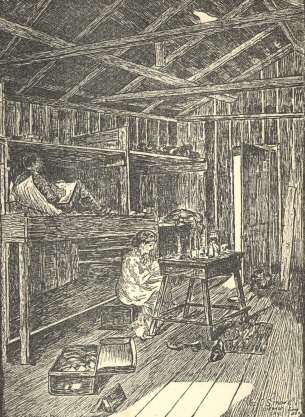
WITH A FRONTISPIECE BY JOSEPH D.STRONG
LONDON
CHATTO & WINDUS
1906
“Vixerunt nonnulli in agris, delectati resua familiari. His idem propositum fuit quod regibus, ut nequa re agerent, ne cui parerent, libertate uterentur: cujusproprium est sic vivere ut velis.”
—Cic., De Off., I. xx.
CONTENTS
In the Valley: | ||
I. | Calistoga | 13 |
II. | The Petrified Forest | 24 |
III. | Napa Wine | 34 |
IV. | The Scot Abroad | 48 |
With the Children ofIsrael: | ||
I. | To Introduce Mr. Kelmar | 59 |
II. | First Impressions of Silverado | 68 |
III. | The Return | 92 |
The Act ofSquatting | 103 | |
The Hunter’sFamily | 127 | |
The Sea Fogs | 153 | |
The Toll House | 171 | |
A Starry Drive | 185 | |
Episodes in the Story of aMine | 197 | |
Toils AndPleasures | 223 | |
p. 1THESILVERADO SQUATTERS
The scene of this little book is ona high mountain. There are, indeed, many higher; there aremany of a nobler outline. It is no place of pilgrimage forthe summary globe-trotter; but to one who lives upon its sides,Mount Saint Helena soon becomes a centre of interest. It isthe Mont Blanc of one section of the Californian Coast Range,none of its near neighbours rising to one-half itsaltitude. It looks down on much green, intricatecountry. It feeds in the spring-time many splashingbrooks. From its summit you must have an excellent lessonof geography: seeing, to the south, San Francisco Bay, withTamalpais on the one hand and Monte Diablo on the other; to thewest and thirty miles away, the open ocean; eastward, across thecorn-lands and thick tule swamps of Sacramento Valley, to wherethe Central Pacific railroad begins to climb the sides of theSierras; and northward, for what I know, the white head of Shastalooking down on Oregon. Three counties, Napa County, LakeCounty, and Sonoma County, march across its cliffyshoulders. Its naked peak stands nearly four thousand fivehundred feet above the sea; its sides are fringed with forest;and the soil, where it is bare, glows warm with cinnabar.
Life in its shadow goes rustically forward. Bucks, andbears, and rattlesnakes, and former mining operations, are thestaple of men’s talk. Agriculture has only begun tomount above the valley. And though in a few years from nowthe whole district may be smiling with farms, passing trainsshaking the mountain to the heart, many-windowed hotels lightingup the night like factories, and a prosperous city occupying thesite of sleepy Calistoga; yet in the mean time, around the footof that mountain the silence of nature reigns in a great measureunbroken, and the people of hill and valley go sauntering abouttheir business as in the days before the flood.
To reach Mount Saint Helena from San Francisco, the travellerhas twice to cross the bay: once by the busy Oakland Ferry, andagain, after an hour or so of the railway, from Vallejo junctionto Vallejo. Thence he takes rail once more to mount thelong green strath of Napa Valley.
In all the contractions and expansions of that inland sea, theBay of San Francisco, there can be few drearier scenes than theVallejo Ferry. Bald shores and a low, bald islet inclosethe sea; through the narrows the tide bubbles, muddy like ariver. When we made the passage (bound, although yet weknew it not, for Silverado) the steamer jumped, and the blackbuoys were dancing in the jabble; the ocean breeze blew killingchill; and, although the upper sky was still unflecked withvapour, the sea fogs were pouring in from seaward, over thehilltops of Marin county, in one great, shapeless, silvercloud.
South Vallejo is typical of many Californian towns. Itwas a blunder; the site has proved untenable; and, although it isstill such a young place by the scale of Europe, it has alreadybegun to be deserted for its neighbour and namesake, NorthVallejo. A long pier, a number of drinking saloons, a hotelof a great size, marshy pools where the frogs keep up theircroaking, and even at high noon the entire absence of any humanface or voice—these are the marks of South Vallejo. Yet there was a tall building beside the pier, labelled theStar Flour Mills; and sea-going, full-rigged ships layclose along shore, waiting for their cargo. Soon thesewould be plunging round the Horn, soon the flour from the StarFlour Millswould be landed on the wharves ofLiverpool. For that, too, is one of England’soutposts; thither, to this gaunt mill, across the Atlantic andPacific deeps and round about the icy Horn, this crowd of great,three-masted, deep-sea ships come, bringing nothing, and returnwith bread.
The Frisby House, for that was the name of the hotel, was aplace of fallen fortunes, like the town. It was now givenup to labourers, and partly ruinous. At dinner there wasthe ordinary display of what is called in the west a two-bithouse: the tablecloth checked red and white, the plague offlies, the wire hencoops over the dishes, the great variety andinvariable vileness of the food and the rough coatless mendevoting it in silence. In our bedroom, the stove would notburn, though it would smoke; and while one window would not open,the other would not shut. There was a view on a bit ofempty road, a few dark houses, a donkey wandering with its shadowon a slope, and a blink of sea, with a tall ship lying anchoredin the moonlight. All about that dreary inn frogs sangtheir ungainly chorus.
Early the next morning we mounted the hill along a woodenfootway, bridging one marish spot after another. Here andthere, as we ascended, we passed a house embowered in whiteroses. More of the bay became apparent, and soon the bluepeak of Tamalpais rose above the green level of the islandopposite. It told us we were still but a little way fromthe city of the Golden Gates, already, at that hour, beginning toawake among the sand-hills. It called to us over the watersas with the voice of a bird. Its stately head, blue as asapphire on the paler azure of the sky, spoke to us of wideroutlooks and the bright Pacific. For Tamalpais standssentry, like a lighthouse, over the Golden Gates, between the bayand the open ocean, and looks down indifferently on both. Even as we saw and hailed it from Vallejo, seamen, far out atsea, were scanning it with shaded eyes; and, as if to answer tothe thought, one of the great ships below began silently toclothe herself with white sails, homeward bound for England.
For some way beyond Vallejo the railway led us through baldgreen pastures. On the west the rough highlands of Marinshut off the ocean; in the midst, in long, straggling, gleamingarms, the bay died out among the grass; there were few trees andfew enclosures; the sun shone wide over open uplands, thedisplumed hills stood clear against the sky. But by-and-bythese hills began to draw nearer on either hand, and firstthicket and then wood began to clothe their sides; and soon wewere away from all signs of the sea’s neighbourhood,mounting an inland, irrigated valley. A great variety ofoaks stood, now severally, now in a becoming grove, among thefields and vineyards. The towns were compact, in aboutequal proportions, of bright, new wooden houses and great andgrowing forest trees; and the chapel bell on the engine soundedmost festally that sunny Sunday, as we drew up at one green townafter another, with the townsfolk trooping in theirSunday’s best to see the strangers, with the sun sparklingon the clean houses, and great domes of foliage humming overheadin the breeze.
This pleasant Napa Valley is, at its north end, blockaded byour mountain. There, at Calistoga, the railroad ceases, andthe traveller who intends faring farther, to the Geysers or tothe springs in Lake County, must cross the spurs of the mountainby stage. Thus, Mount Saint Helena is not only a summit,but a frontier; and, up to the time of writing, it has stayed theprogress of the iron horse.
PART I—IN THE VALLEY
p.13CHAPTER I—CALISTOGA
It is difficult for a European toimagine Calistoga, the whole place is so new, and of such anaccidental pattern; the very name, I hear, was invented at asupper-party by the man who found the springs.
The railroad and the highway come up the valley about parallelto one another. The street of Calistoga joins theperpendicular to both—a wide street, with bright, clean,low houses, here and there a verandah over the sidewalk, here andthere a horse-post, here and there lounging townsfolk. Other streets are marked out, and most likely named; for thesetowns in the New World begin with a firm resolve to grow larger,Washington and Broadway, and then First and Second, and so forth,being boldly plotted out as soon as the community indulges in aplan. But, in the meanwhile, all the life and most of thehouses of Calistoga are concentrated upon that street between therailway station and the road. I never heard it called byany name, but I will hazard a guess that it is either Washingtonor Broadway. Here are the blacksmith’s, thechemist’s, the general merchant’s, and Kong Sam Kee,the Chinese laundryman’s; here, probably, is the office ofthe local paper (for the place has a paper—they all havepapers); and here certainly is one of the hotels,Cheeseborough’s, whence the daring Foss, a man dear tolegend, starts his horses for the Geysers.
It must be remembered that we are here in a land ofstage-drivers and highwaymen: a land, in that sense, like Englanda hundred years ago. The highway robber—road-agent,he is quaintly called—is still busy in these parts. The fame of Vasquez is still young. Only a few years go,the Lakeport stage was robbed a mile or two from Calistoga. In 1879, the dentist of Mendocino City, fifty miles away upon thecoast, suddenly threw off the garments of his trade, likeGrindoff, in The Miller and his Men, and flamed forth inhis second dress as a captain of banditti. A great robberywas followed by a long chase, a chase of days if not of weeks,among the intricate hill-country; and the chase was followed bymuch desultory fighting, in which several—and the dentist,I believe, amongst the number—bit the dust. The grasswas springing for the first time, nourished upon their blood,when I arrived in Calistoga. I am reminded of anotherhighwayman of that same year. “He had beenunwell,” so ran his humorous defence, “and the doctortold him to take something, so he took theexpress-box.”
The cultus of the stage-coachman always flourishes highestwhere there are thieves on the road, and where the guard travelsarmed, and the stage is not only a link between country and city,and the vehicle of news, but has a faint warfaring aroma, like aman who should be brother to a soldier. California boastsher famous stage-drivers, and among the famous Foss is notforgotten. Along the unfenced, abominable mountain roads,he launches his team with small regard to human life or thedoctrine of probabilities. Flinching travellers, who beholdthemselves coasting eternity at every corner, look with naturaladmiration at their driver’s huge, impassive, fleshycountenance. He has the very face for the driver in SamWeller’s anecdote, who upset the election party at therequired point. Wonderful tales are current of hisreadiness and skill. One in particular, of how one of hishorses fell at a ticklish passage of the road, and how Foss letslip the reins, and, driving over the fallen animal, arrived atthe next stage with only three. This I relate as I heardit, without guarantee.
I only saw Foss once, though, strange as it may sound, I havetwice talked with him. He lives out of Calistoga, at aranche called Fossville. One evening, after he was longgone home, I dropped into Cheeseborough’s, and was asked ifI should like to speak with Mr. Foss. Supposing that theinterview was impossible, and that I was merely called upon tosubscribe the general sentiment, I boldly answered“Yes.” Next moment, I had one instrument at myear, another at my mouth and found myself, with nothing in theworld to say, conversing with a man several miles off amongdesolate hills. Foss rapidly and somewhat plaintivelybrought the conversation to an end; and he returned to hisnight’s grog at Fossville, while I strolled forth again onCalistoga high street. But it was an odd thing that here,on what we are accustomed to consider the very skirts ofcivilization, I should have used the telephone for the first timein my civilized career. So it goes in these youngcountries; telephones, and telegraphs, and newspapers, andadvertisements running far ahead among the Indians and thegrizzly bears.
Alone, on the other side of the railway, stands the SpringsHotel, with its attendant cottages. The floor of the valleyis extremely level to the very roots of the hills; only here andthere a hillock, crowned with pines, rises like the barrow ofsome chieftain famed in war; and right against one of thesehillocks is the Springs Hotel—is or was; for since I wasthere the place has been destroyed by fire, and has risen againfrom its ashes. A lawn runs about the house, and the lawnis in its turn surrounded by a system of little five-roomedcottages, each with a verandah and a weedy palm before thedoor. Some of the cottages are let to residents, and theseare wreathed in flowers. The rest are occupied by ordinaryvisitors to the Hotel; and a very pleasant way this is, by whichyou have a little country cottage of your own, without domesticburthens, and by the day or week.
The whole neighbourhood of Mount Saint Helena is full ofsulphur and of boiling springs. The Geysers are famous;they were the great health resort of the Indians before thecoming of the whites. Lake County is dotted with spas; HotSprings and White Sulphur Springs are the names of two stationson the Napa Valley railroad; and Calistoga itself seems to reposeon a mere film above a boiling, subterranean lake. At oneend of the hotel enclosure are the springs from which it takesits name, hot enough to scald a child seriously while I wasthere. At the other end, the tenant of a cottage sank awell, and there also the water came up boiling. It keepsthis end of the valley as warm as a toast. I have goneacross to the hotel a little after five in the morning, when asea fog from the Pacific was hanging thick and gray, and dark anddirty overhead, and found the thermometer had been up before me,and had already climbed among the nineties; and in the stress ofthe day it was sometimes too hot to move about.
But in spite of this heat from above and below, doing one onboth sides, Calistoga was a pleasant place to dwell in;beautifully green, for it was then that favoured moment in theCalifornian year, when the rains are over and the dusty summerhas not yet set in; often visited by fresh airs, now from themountain, now across Sonoma from the sea; very quiet, very idle,very silent but for the breezes and the cattle bellsafield. And there was something satisfactory in the sightof that great mountain that enclosed us to the north: whether itstood, robed in sunshine, quaking to its topmost pinnacle withthe heat and brightness of the day; or whether it set itself toweaving vapours, wisp after wisp growing, trembling, fleeting,and fading in the blue.
The tangled, woody, and almost trackless foot-hills thatenclose the valley, shutting it off from Sonoma on the west, andfrom Yolo on the east—rough as they were in outline, dugout by winter streams, crowned by cliffy bluffs and nodding pinetrees—wore dwarfed into satellites by the bulk and bearingof Mount Saint Helena. She over-towered them by two-thirdsof her own stature. She excelled them by the boldness ofher profile. Her great bald summit, clear of trees andpasture, a cairn of quartz and cinnabar, rejected kinship withthe dark and shaggy wilderness of lesser hill-tops.
p.24CHAPTER II—THE PETRIFIED FOREST
We drove off from the Springs Hotelabout three in the afternoon. The sun warmed me to theheart. A broad, cool wind streamed pauselessly down thevalley, laden with perfume. Up at the top stood Mount SaintHelena, a bulk of mountain, bare atop, with tree-fringed spurs,and radiating warmth. Once we saw it framed in a grove oftall and exquisitely graceful white oaks, in line and colour afinished composition. We passed a cow stretched by theroadside, her bell slowly beating time to the movement of herruminating jaws, her big red face crawled over by half a dozenflies, a monument of content.
A little farther, and we struck to the left up a mountainroad, and for two hours threaded one valley after another, green,tangled, full of noble timber, giving us every now and again asight of Mount Saint Helena and the blue hilly distance, andcrossed by many streams, through which we splashed to thecarriage-step. To the right or the left, there was scarceany trace of man but the road we followed; I think we passed butone ranchero’s house in the whole distance, and that wasclosed and smokeless. But we had the society of thesebright streams—dazzlingly clear, as is their wont,splashing from the wheels in diamonds, and striking a livelycoolness through the sunshine. And what with theinnumerable variety of greens, the masses of foliage tossing inthe breeze, the glimpses of distance, the descents into seeminglyimpenetrable thickets, the continual dodging of the road whichmade haste to plunge again into the covert, we had a fine senseof woods, and spring-time, and the open air.
Our driver gave me a lecture by the way on Californiantrees—a thing I was much in need of, having fallen amongpainters who know the name of nothing, and Mexicans who know thename of nothing in English. He taught me the madrona, themanzanita, the buck-eye, the maple; he showed me the crestedmountain quail; he showed me where some young redwoods werealready spiring heavenwards from the ruins of the old; for inthis district all had already perished: redwoods and redskins,the two noblest indigenous living things, alike condemned.
At length, in a lonely dell, we came on a huge wooden gatewith a sign upon it like an inn. “The PetrifiedForest. Proprietor: C. Evans,” ran the legend. Within, on a knoll of sward, was the house of the proprietor, andanother smaller house hard by to serve as a museum, wherephotographs and petrifactions were retailed. It was a purelittle isle of touristry among these solitary hills.
The proprietor was a brave old white-faced Swede. He hadwandered this way, Heaven knows how, and taken up hisacres—I forget how many years ago—all alone, bentdouble with sciatica, and with six bits in his pocket and an axeupon his shoulder. Long, useless years of seafaring hadthus discharged him at the end, penniless and sick. Withoutdoubt he had tried his luck at the diggings, and got no good fromthat; without doubt he had loved the bottle, and lived the lifeof Jack ashore. But at the end of these adventures, here hecame; and, the place hitting his fancy, down he sat to make a newlife of it, far from crimps and the salt sea. And the verysight of his ranche had done him good. It was “thehandsomest spot in the Californy mountains.” “Isn’t it handsome, now?” he said. Everypenny he makes goes into that ranche to make it handsomer. Then the climate, with the sea-breeze every afternoon in thehottest summer weather, had gradually cured the sciatica; and hissister and niece were now domesticated with him forcompany—or, rather, the niece came only once in the twodays, teaching music the meanwhile in the valley. And then,for a last piece of luck, “the handsomest spot in theCaliforny mountains” had produced a petrified forest, whichMr. Evans now shows at the modest figure of half a dollar a head,or two-thirds of his capital when he first came there with an axeand a sciatica.
This tardy favourite of fortune—hobbling a little, Ithink, as if in memory of the sciatica, but with not a trace thatI can remember of the sea—thoroughly ruralized from head tofoot, proceeded to escort us up the hill behind his house.
“Who first found the forest?” asked my wife.
“The first? I was that man,” said he. “I was cleaning up the pasture for my beasts, when I foundthis”—kicking a great redwood seven feet indiameter, that lay there on its side, hollow heart, clinginglumps of bark, all changed into gray stone, with veins of quartzbetween what had been the layers of the wood.
“Were you surprised?”
“Surprised? No! What would I be surprisedabout? What did I know about petrifactions—followingthe sea? Petrifaction! There was no such word in mylanguage! I knew about putrifaction, though! Ithought it was a stone; so would you, if you was cleaning uppasture.”
And now he had a theory of his own, which I did not quitegrasp, except that the trees had not “grewed”there. But he mentioned, with evident pride, that hediffered from all the scientific people who had visited the spot;and he flung about such words as “tufa” and“scilica” with careless freedom.
When I mentioned I was from Scotland, “My oldcountry,” he said; “my old country”—witha smiling look and a tone of real affection in his voice. Iwas mightily surprised, for he was obviously Scandinavian, andbegged him to explain. It seemed he had learned his Englishand done nearly all his sailing in Scotch ships. “Outof Glasgow,” said he, “or Greenock; but that’sall the same—they all hail from Glasgow.” And he wasso pleased with me for being a Scotsman, and his adoptedcompatriot, that he made me a present of a very beautiful pieceof petrifaction—I believe the most beautiful and portablehe had.
Here was a man, at least, who was a Swede, a Scot, and anAmerican, acknowledging some kind allegiance to threelands. Mr. Wallace’s Scoto-Circassian will not failto come before the reader. I have myself met and spokenwith a Fifeshire German, whose combination of abominable accentsstruck me dumb. But, indeed, I think we all belong to manycountries. And perhaps this habit of much travel, and theengendering of scattered friendships, may prepare the euthanasiaof ancient nations.
And the forest itself? Well, on a tangled, brieryhillside—for the pasture would bear a little furthercleaning up, to my eyes—there lie scattered thickly variouslengths of petrified trunk, such as the one alreadymentioned. It is very curious, of course, and ancientenough, if that were all. Doubtless, the heart of thegeologist beats quicker at the sight; but, for my part, I wasmightily unmoved. Sight-seeing is the art ofdisappointment.
“There’s nothing under heaven soblue,
That’s fairly worth the travelling to.”
But, fortunately, Heaven rewards us with many agreeableprospects and adventures by the way; and sometimes, when we goout to see a petrified forest, prepares a far more delightfulcuriosity, in the form of Mr. Evans, whom may all prosperityattend throughout a long and green old age.
p.34CHAPTER III—NAPA WINE
I was interested in Californianwine. Indeed, I am interested in all wines, and have beenall my life, from the raisin wine that a schoolfellow keptsecreted in his play-box up to my last discovery, those notableValtellines, that once shone upon the board of Cæsar.
Some of us, kind old Pagans, watch with dread the shadowsfalling on the age: how the unconquerable worm invades the sunnyterraces of France, and Bordeaux is no more, and the Rhone a mereArabia Petræa. Château Neuf is dead, and I havenever tasted it; Hermitage—a hermitage indeed from alllife’s sorrows—lies expiring by the river. Andin the place of these imperial elixirs, beautiful to every sense,gem-hued, flower-scented, dream-compellers:—behold upon thequays at Cette the chemicals arrayed; behold the analyst atMarseilles, raising hands in obsecration, attesting god Lyoeus,and the vats staved in, and the dishonest wines poured forthamong the sea. It is not Pan only; Bacchus, too, isdead.
If wine is to withdraw its most poetic countenance, the sun ofthe white dinner-cloth, a deity to be invoked by two or three,all fervent, hushing their talk, degusting tenderly, and storingreminiscences—for a bottle of good wine, like a good act,shines ever in the retrospect—if wine is to desert us, gothy ways, old Jack! Now we begin to have compunctions, andlook back at the brave bottles squandered upon dinner-parties,where the guests drank grossly, discussing politics the while,and even the schoolboy “took his whack,” likeliquorice water. And at the same time, we look timidlyforward, with a spark of hope, to where the new lands, alreadyweary of producing gold, begin to green with vineyards. Anice point in human history falls to be decided by Californianand Australian wines.
Wine in California is still in the experimental stage; andwhen you taste a vintage, grave economical questions areinvolved. The beginning of vine-planting is like thebeginning of mining for the precious metals: the wine-grower also“Prospects.” One corner of land after another istried with one kind of grape after another. This is afailure; that is better; a third best. So, bit by bit, theygrope about for their Clos Vougeot and Lafite. Those lodesand pockets of earth, more precious than the precious ores, thatyield inimitable fragrance and soft fire; those virtuousBonanzas, where the soil has sublimated under sun and stars tosomething finer, and the wine is bottled poetry: these still lieundiscovered; chaparral conceals, thicket embowers them; theminer chips the rock and wanders farther, and the grizzly musesundisturbed. But there they bide their hour, awaiting theirColumbus; and nature nurses and prepares them. The smack ofCalifornian earth shall linger on the palate of yourgrandson.
Meanwhile the wine is merely a good wine; the best that I havetasted better than a Beaujolais, and not unlike. But thetrade is poor; it lives from hand to mouth, putting its all intoexperiments, and forced to sell its vintages. To find oneproperly matured, and bearing its own name, is to befortune’s favourite.
Bearing its own name, I say, and dwell upon the innuendo.
“You want to know why California wine is not drunk inthe States?” a San Francisco wine merchant said to me,after he had shown me through his premises. “Well,here’s the reason.”
And opening a large cupboard, fitted with many little drawers,he proceeded to shower me all over with a great variety ofgorgeously tinted labels, blue, red, or yellow, stamped withcrown or coronet, and hailing from such a profusion ofclosand chateaux, that a single department couldscarce have furnished forth the names. But it was strangethat all looked unfamiliar.
“Chateau X—?” said I. “I neverheard of that.”
“I dare say not,” said he. “I had beenreading one of X—’s novels.”
They were all castles in Spain! But that sure enough isthe reason why California wine is not drunk in the States.
Napa valley has been long a seat of the wine-growingindustry. It did not here begin, as it does too often, inthe low valley lands along the river, but took at once to therough foot-hills, where alone it can expect to prosper. Abasking inclination, and stones, to be a reservoir of theday’s heat, seem necessary to the soil for wine; thegrossness of the earth must be evaporated, its marrow dailymelted and refined for ages; until at length these clods thatbreak below our footing, and to the eye appear but common earth,are truly and to the perceiving mind, a masterpiece ofnature. The dust of Richebourg, which the wind carriesaway, what an apotheosis of the dust! Not man himself canseem a stranger child of that brown, friable powder, than theblood and sun in that old flask behind the faggots.
A Californian vineyard, one of man’s outposts in thewilderness, has features of its own. There is nothing hereto remind you of the Rhine or Rhone, of the low côted’or, or the infamous and scabby deserts of Champagne;but all is green, solitary, covert. We visited two of them,Mr. Schram’s and Mr. M’Eckron’s, sharing thesame glen.
Some way down the valley below Calistoga, we turned sharply tothe south and plunged into the thick of the wood. A rudetrail rapidly mounting; a little stream tinkling by on the onehand, big enough perhaps after the rains, but already yielding upits life; overhead and on all sides a bower of green and tangledthicket, still fragrant and still flower-bespangled by the earlyseason, where thimble-berry played the part of our Englishhawthorn, and the buck-eyes were putting forth their twistedhorns of blossom: through all this, we struggled toughly upwards,canted to and fro by the roughness of the trail, and continuallyswitched across the face by sprays of leaf or blossom. Thelast is no great inconvenience at home; but here in California itis a matter of some moment. For in all woods and by everywayside there prospers an abominable shrub or weed, calledpoison-oak, whose very neighbourhood is venomous to some, andwhose actual touch is avoided by the most impervious.
The two houses, with their vineyards, stood each in a greenniche of its own in this steep and narrow forest dell. Though they were so near, there was already a good difference inlevel; and Mr. M’Eckron’s head must be a long wayunder the feet of Mr. Schram. No more had been cleared thanwas necessary for cultivation; close around each oasis ran thetangled wood; the glen enfolds them; there they lie basking insun and silence, concealed from all but the clouds and themountain birds.
Mr. M’Eckron’s is a bachelor establishment; alittle bit of a wooden house, a small cellar hard by in thehillside, and a patch of vines planted and tended single-handedby himself. He had but recently began; his vines wereyoung, his business young also; but I thought he had the look ofthe man who succeeds. He hailed from Greenock: heremembered his father putting him inside Mons Meg, and thattouched me home; and we exchanged a word or two of Scotch, whichpleased me more than you would fancy.
Mr. Schram’s, on the other hand, is the oldest vineyardin the valley, eighteen years old, I think; yet he began apenniless barber, and even after he had broken ground up herewith his black malvoisies, continued for long to tramp the valleywith his razor. Now, his place is the picture ofprosperity: stuffed birds in the verandah, cellars far dug intothe hillside, and resting on pillars like a bandit’scave:—all trimness, varnish, flowers, and sunshine, amongthe tangled wildwood. Stout, smiling Mrs. Schram, who hasbeen to Europe and apparently all about the States for pleasure,entertained Fanny in the verandah, while I was tasting wines inthe cellar. To Mr. Schram this was a solemn office; hisserious gusto warmed my heart; prosperity had not yet whollybanished a certain neophite and girlish trepidation, and hefollowed every sip and read my face with proud anxiety. Itasted all. I tasted every variety and shade ofSchramberger, red and white Schramberger, Burgundy Schramberger,Schramberger Hock, Schramberger Golden Chasselas, the latter witha notable bouquet, and I fear to think how many more. Muchof it goes to London—most, I think; and Mr. Schram has agreat notion of the English taste.
In this wild spot, I did not feel the sacredness of ancientcultivation. It was still raw, it was no Marathon, and noJohannisberg; yet the stirring sunlight, and the growing vines,and the vats and bottles in the cavern, made a pleasant music forthe mind. Here, also, earth’s cream was being skimmedand garnered; and the London customers can taste, such as it is,the tang of the earth in this green valley. So local, soquintessential is a wine, that it seems the very birds in theverandah might communicate a flavour, and that romantic cellarinfluence the bottle next to be uncorked in Pimlico, and thesmile of jolly Mr. Schram might mantle in the glass.
But these are but experiments. All things in this newland are moving farther on: the wine-vats and the miner’sblasting tools but picket for a night, like Bedouin pavillions;and to-morrow, to fresh woods! This stir of change andthese perpetual echoes of the moving footfall, haunt theland. Men move eternally, still chasing Fortune; and,fortune found, still wander. As we drove back to Calistoga,the road lay empty of mere passengers, but its green side wasdotted with the camps of travelling families: one cumbered with agreat waggonful of household stuff, settlers going to occupy aranche they had taken up in Mendocino, or perhaps Tehama County;another, a party in dust coats, men and women, whom we foundcamped in a grove on the roadside, all on pleasure bent, with aChinaman to cook for them, and who waved their hands to us as wedrove by.
p.48CHAPTER IV—THE SCOT ABROAD
A few pages back, I wrote that aman belonged, in these days, to a variety of countries; but theold land is still the true love, the others are but pleasantinfidelities. Scotland is indefinable; it has no unityexcept upon the map. Two languages, many dialects,innumerable forms of piety, and countless local patriotisms andprejudices, part us among ourselves more widely than the extremeeast and west of that great continent of America. When I amat home, I feel a man from Glasgow to be something like a rival,a man from Barra to be more than half a foreigner. Yet letus meet in some far country, and, whether we hail from the braesof Manor or the braes of Mar, some ready-made affection joins uson the instant. It is not race. Look at us. Oneis Norse, one Celtic, and another Saxon. It is notcommunity of tongue. We have it not among ourselves; and wehave it almost to perfection, with English, or Irish, orAmerican. It is no tie of faith, for we detest eachother’s errors. And yet somewhere, deep down in theheart of each one of us, something yearns for the old land, andthe old kindly people.
Of all mysteries of the human heart, this is perhaps the mostinscrutable. There is no special loveliness in that graycountry, with its rainy, sea-beat archipelago; its fields of darkmountains; its unsightly places, black with coal; its treeless,sour, unfriendly looking corn-lands; its quaint, gray, castledcity, where the bells clash of a Sunday, and the wind squalls,and the salt showers fly and beat. I do not even know if Idesire to live there; but let me hear, in some far land, akindred voice sing out, “Oh, why left I my hame?” andit seems at once as if no beauty under the kind heavens, and nosociety of the wise and good, can repay me for my absence from mycountry. And though I think I would rather die elsewhere,yet in my heart of hearts I long to be buried among good Scotsclods. I will say it fairly, it grows on me with everyyear: there are no stars so lovely as Edinburghstreet-lamps. When I forget thee, auld Reekie, may my righthand forget its cunning!
The happiest lot on earth is to be born a Scotchman. Youmust pay for it in many ways, as for all other advantages onearth. You have to learn the paraphrases and the shortercatechism; you generally take to drink; your youth, as far as Ican find out, is a time of louder war against society, of moreoutcry and tears and turmoil, than if you had been born, forinstance, in England. But somehow life is warmer andcloser; the hearth burns more redly; the lights of home shinesofter on the rainy street; the very names, endeared in verse andmusic, cling nearer round our hearts. An Englishman maymeet an Englishman to-morrow, upon Chimborazo, and neither ofthem care; but when the Scotch wine-grower told me of Mons Meg,it was like magic.
“From the dim shieling on the mistyisland
Mountains divide us, and a world of seas;
Yet still our hearts are true, our hearts are Highland,
And we, in dreams, behold the Hebrides.”
And, Highland and Lowland, all our hearts are Scotch.
Only a few days after I had seen M’Eckron, a messagereached me in my cottage. It was a Scotchman who had comedown a long way from the hills to market. He had heardthere was a countryman in Calistoga, and came round to the hotelto see him. We said a few words to each other; we had notmuch to say—should never have seen each other had we stayedat home, separated alike in space and in society; and then weshook hands, and he went his way again to his ranche among thehills, and that was all.
Another Scotchman there was, a resident, who for the more loveof the common country, douce, serious, religious man, drove meall about the valley, and took as much interest in me as if I hadbeen his son: more, perhaps; for the son has faults too keenlyfelt, while the abstract countryman is perfect—like a whiffof peats.
And there was yet another. Upon him I came suddenly, ashe was calmly entering my cottage, his mind quite evidently benton plunder: a man of about fifty, filthy, ragged, roguish, with achimney-pot hat and a tail coat, and a pursing of his mouth thatmight have been envied by an elder of the kirk. He had justsuch a face as I have seen a dozen times behind the plate.
“Hullo, sir!” I cried. “Where are yougoing?”
He turned round without a quiver.
“You’re a Scotchman, sir?” he saidgravely. “So am I; I come from Aberdeen. Thisis my card,” presenting me with a piece of pasteboard whichhe had raked out of some gutter in the period of the rains. “I was just examining this palm,” he continued,indicating the misbegotten plant before our door, “which isthe largest spacimen I have yet observed inCalifoarnia.”
There were four or five larger within sight. But wherewas the use of argument? He produced a tape-line, made mehelp him to measure the tree at the level of the ground, andentered the figures in a large and filthy pocket-book, all withthe gravity of Solomon. He then thanked me profusely,remarking that such little services were due between countrymen;shook hands with me, “for add lang syne,” as he said;and took himself solemnly away, radiating dirt and humbug as hewent.
A month or two after this encounter of mine, there came a Scotto Sacramento—perhaps from Aberdeen. Anyway, therenever was any one more Scotch in this wide world. He couldsing and dance, and drink, I presume; and he played the pipeswith vigour and success. All the Scotch in Sacramentobecame infatuated with him, and spent their spare time and money,driving him about in an open cab, between drinks, while he blewhimself scarlet at the pipes. This is a very sadstory. After he had borrowed money from every one, he andhis pipes suddenly disappeared from Sacramento, and when I lastheard, the police were looking for him.
I cannot say how this story amused me, when I felt myself sothoroughly ripe on both sides to be duped in the same way.
It is at least a curious thing, to conclude, that the raceswhich wander widest, Jews and Scotch, should be the most clannishin the world. But perhaps these two are cause and effect:“For ye were strangers in the land of Egypt.”
PART II—WITH THE CHILDREN OF ISRAEL
p.59CHAPTER I.—TO INTRODUCE MR. KELMAR
One thing in this new country veryparticularly strikes a stranger, and that is the number ofantiquities. Already there have been many cycles ofpopulation succeeding each other, and passing away and leavingbehind them relics. These, standing on into changed times,strike the imagination as forcibly as any pyramid or feudaltower. The towns, like the vineyards, are experimentallyfounded: they grow great and prosper by passing occasions; andwhen the lode comes to an end, and the miners move elsewhere, thetown remains behind them, like Palmyra in the desert. Isuppose there are, in no country in the world, so many desertedtowns as here in California.
The whole neighbourhood of Mount Saint Helena, now so quietand sylvan, was once alive with mining camps and villages. Here there would be two thousand souls under canvas; there onethousand or fifteen hundred ensconced, as if for ever, in a townof comfortable houses. But the luck had failed, the minespetered out; and the army of miners had departed, and left thisquarter of the world to the rattlesnakes and deer and grizzlies,and to the slower but steadier advance of husbandry.
It was with an eye on one of these deserted places, Pine Flat,on the Geysers road, that we had come first to Calistoga. There is something singularly enticing in the idea of going,rent-free, into a ready-made house. And to the Britishmerchant, sitting at home at ease, it may appear that, with sucha roof over your head and a spring of clear water hard by, thewhole problem of the squatter’s existence would besolved. Food, however, has yet to be considered, I will goas far as most people on tinned meats; some of the brightestmoments of my life were passed over tinned mulli-gatawney in thecabin of a sixteen-ton schooner, storm-stayed in Portree Bay; butafter suitable experiments, I pronounce authoritatively that mancannot live by tins alone. Fresh meat must be had on anoccasion. It is true that the great Foss, driving by alongthe Geysers road, wooden-faced, but glorified with legend, mighthave been induced to bring us meat, but the great Foss couldhardly bring us milk. To take a cow would have involvedtaking a field of grass and a milkmaid; after which it would havebeen hardly worth while to pause, and we might have added to ourcolony a flock of sheep and an experienced butcher.
It is really very disheartening how we depend on other peoplein this life. “Mihi est propositum,” as you maysee by the motto, “id quod regibus;” and behold itcannot be carried out, unless I find a neighbour rolling incattle.
Now, my principal adviser in this matter was one whom I willcall Kelmar. That was not what he called himself, but assoon as I set eyes on him, I knew it was or ought to be his name;I am sure it will be his name among the angels. Kelmar wasthe store-keeper, a Russian Jew, good-natured, in a very thrivingway of business, and, on equal terms, one of the most serviceableof men. He also had something of the expression of a Scotchcountry elder, who, by some peculiarity, should chance to be aHebrew. He had a projecting under lip, with which hecontinually smiled, or rather smirked. Mrs. Kelmar was asingularly kind woman; and the oldest son had quite a dark andromantic bearing, and might be heard on summer evenings playingsentimental airs on the violin.
I had no idea, at the time I made his acquaintance, what animportant person Kelmar was. But the Jew store-keepers ofCalifornia, profiting at once by the needs and habits of thepeople, have made themselves in too many cases the tyrants of therural population. Credit is offered, is pressed on the newcustomer, and when once he is beyond his depth, the tune changes,and he is from thenceforth a white slave. I believe, evenfrom the little I saw, that Kelmar, if he choose to put on thescrew, could send half the settlers packing in a radius of sevenor eight miles round Calistoga. These are continuallypaying him, but are never suffered to get out of debt. Hepalms dull goods upon them, for they dare not refuse to buy; hegoes and dines with them when he is on an outing, and no man isloudlier welcomed; he is their family friend, the director oftheir business, and, to a degree elsewhere unknown in moderndays, their king.
For some reason, Kelmar always shook his head at the mentionof Pine Flat, and for some days I thought he disapproved of thewhole scheme and was proportionately sad. One fine morning,however, he met me, wreathed in smiles. He had found thevery place for me—Silverado, another old mining town, rightup the mountain. Rufe Hanson, the hunter, could take careof us—fine people the Hansons; we should be close to theToll House, where the Lakeport stage called daily; it was thebest place for my health, besides. Rufe had beenconsumptive, and was now quite a strong man, ain’tit? In short, the place and all its accompaniments seemedmade for us on purpose.
He took me to his back door, whence, as from every point ofCalistoga, Mount Saint Helena could be seen towering in theair. There, in the nick, just where the eastern foothillsjoined the mountain, and she herself began to rise above the zoneof forest—there was Silverado. The name had alreadypleased me; the high station pleased me still more. I beganto inquire with some eagerness. It was but a little whileago that Silverado was a great place. The mine—asilver mine, of course—had promised great things. There was quite a lively population, with several hotels andboarding-houses; and Kelmar himself had opened a branch store,and done extremely well—“Ain’t it?” hesaid, appealing to his wife. And she said, “Yes;extremely well.” Now there was no one living in the townbut Rufe the hunter; and once more I heard Rufe’s praisesby the yard, and this time sung in chorus.
I could not help perceiving at the time that there wassomething underneath; that no unmixed desire to have uscomfortably settled had inspired the Kelmars with this flow ofwords. But I was impatient to be gone, to be about mykingly project; and when we were offered seats in Kelmar’swaggon, I accepted on the spot. The plan of their nextSunday’s outing took them, by good fortune, over the borderinto Lake County. They would carry us so far, drop us atthe Toll House, present us to the Hansons, and call for us againon Monday morning early.
p.68CHAPTER II—FIRST IMPRESSIONS OF SILVERADO
We were to leave by six precisely;that was solemnly pledged on both sides; and a messenger came tous the last thing at night, to remind us of the hour. Butit was eight before we got clear of Calistoga: Kelmar, Mrs.Kelmar, a friend of theirs whom we named Abramina, her littledaughter, my wife, myself, and, stowed away behind us, a clusterof ship’s coffee-kettles. These last were highlyornamental in the sheen of their bright tin, but I could inventno reason for their presence. Our carriageful reckoned up,as near as we could get at it, some three hundred years to thesix of us. Four of the six, besides, were Hebrews. But I never, in all my life, was conscious of so strong anatmosphere of holiday. No word was spoken but of pleasure;and even when we drove in silence, nods and smiles went round theparty like refreshments.
The sun shone out of a cloudless sky. Close at thezenith rode the belated moon, still clearly visible, and, alongone margin, even bright. The wind blew a gale from thenorth; the trees roared; the corn and the deep grass in thevalley fled in whitening surges; the dust towered into the airalong the road and dispersed like the smoke of battle. Itwas clear in our teeth from the first, and for all the windingsof the road it managed to keep clear in our teeth until theend.
For some two miles we rattled through the valley, skirting theeastern foothills; then we struck off to the right, throughhaugh-land, and presently, crossing a dry water-course, enteredthe Toll road, or, to be more local, entered on “thegrade.” The road mounts the near shoulder of MountSaint Helena, bound northward into Lake County. In oneplace it skirts along the edge of a narrow and deep canyon,filled with trees, and I was glad, indeed, not to be driven atthis point by the dashing Foss. Kelmar, with his unvaryingsmile, jogging to the motion of the trap, drove for all the worldlike a good, plain, country clergyman at home; and I profess Iblessed him unawares for his timidity.
Vineyards and deep meadows, islanded and framed with thicket,gave place more and more as we ascended to woods of oak andmadrona, dotted with enormous pines. It was these pines, asthey shot above the lower wood, that produced that pencilling ofsingle trees I had so often remarked from the valley. Thence, looking up and from however far, each fir stands separateagainst the sky no bigger than an eyelash; and all together lenda quaint, fringed aspect to the hills. The oak is no baby;even the madrona, upon these spurs of Mount Saint Helena, comesto a fine bulk and ranks with forest trees—but the pineslook down upon the rest for underwood. As Mount SaintHelena among her foothills, so these dark giants out-top theirfellow-vegetables. Alas! if they had left the redwoods, thepines, in turn, would have been dwarfed. But the redwoods,fallen from their high estate, are serving as family bedsteads,or yet more humbly as field fences, along all Napa Valley.
A rough smack of resin was in the air, and a crystal mountainpurity. It came pouring over these green slopes by theoceanful. The woods sang aloud, and gave largely of theirhealthful breath. Gladness seemed to inhabit these upperzones, and we had left indifference behind us in thevalley. “I to the hills lift mine eyes!” There are days in a life when thus to climb out of the lowlands,seems like scaling heaven.
As we continued to ascend, the wind fell upon us withincreasing strength. It was a wonder how the two stouthorses managed to pull us up that steep incline and still facethe athletic opposition of the wind, or how their great eyes wereable to endure the dust. Ten minutes after we went by, atree fell, blocking the road; and even before us leaves werethickly strewn, and boughs had fallen, large enough to make thepassage difficult. But now we were hard by thesummit. The road crosses the ridge, just in the nick thatKelmar showed me from below, and then, without pause, plungesdown a deep, thickly wooded glen on the farther side. Atthe highest point a trail strikes up the main hill to theleftward; and that leads to Silverado. A hundred yardsbeyond, and in a kind of elbow of the glen, stands the Toll HouseHotel. We came up the one side, were caught upon the summitby the whole weight of the wind as it poured over into NapaValley, and a minute after had drawn up in shelter, but allbuffetted and breathless, at the Toll House door.
A water-tank, and stables, and a gray house of two stories,with gable ends and a verandah, are jammed hard against thehillside, just where a stream has cut for itself a narrow canyon,filled with pines. The pines go right up overhead; a littlemore and the stream might have played, like a fire-hose, on theToll House roof. In front the ground drops as sharply as itrises behind. There is just room for the road and a sort ofpromontory of croquet ground, and then you can lean over the edgeand look deep below you through the wood. I said croquetground, not green; for the surface was of brown,beaten earth. The toll-bar itself was the only other noteof originality: a long beam, turning on a post, and kept slightlyhorizontal by a counterweight of stones. Regularly aboutsundown this rude barrier was swung, like a derrick, across theroad and made fast, I think, to a tree upon the farther side.
On our arrival there followed a gay scene in the bar. Iwas presented to Mr. Corwin, the landlord; to Mr. Jennings, theengineer, who lives there for his health; to Mr. Hoddy, a mostpleasant little gentleman, once a member of the Ohio legislature,again the editor of a local paper, and now, with undiminisheddignity, keeping the Toll House bar. I had a number ofdrinks and cigars bestowed on me, and enjoyed a famousopportunity of seeing Kelmar in his glory, friendly, radiant,smiling, steadily edging one of the ship’s kettles on thereluctant Corwin.
Corwin, plainly aghast, resisted gallantly, and for that boutvictory crowned his arms.
At last we set forth for Silverado on foot. Kelmar andhis jolly Jew girls were full of the sentiment of Sunday outings,breathed geniality and vagueness, and suffered a little vile boyfrom the hotel to lead them here and there about the woods. For three people all so old, so bulky in body, and belonging to arace so venerable, they could not but surprise us by theirextreme and almost imbecile youthfulness of spirit. Theywere only going to stay ten minutes at the Toll House; had theynot twenty long miles of road before them on the otherside? Stay to dinner? Not they! Put up thehorses? Never. Let us attach them to the verandah by a wispof straw rope, such as would not have held a person’s haton that blustering day. And with all these protestations ofhurry, they proved irresponsible like children. Kelmarhimself, shrewd old Russian Jew, with a smirk that seemed just tohave concluded a bargain to its satisfaction, intrusted himselfand us devoutly to that boy. Yet the boy was patentlyfallacious; and for that matter a most unsympathetic urchin,raised apparently on gingerbread. He was bent on his ownpleasure, nothing else; and Kelmar followed him to his ruin, withthe same shrewd smirk. If the boy said there was “ahole there in the hill”—a hole, pure and simple,neither more nor less—Kelmar and his Jew girls would followhim a hundred yards to look complacently down that hole. For two hours we looked for houses; and for two hours theyfollowed us, smelling trees, picking flowers, foisting falsebotany on the unwary. Had we taken five, with that vile ladto head them off on idle divagations, for five they would havesmiled and stumbled through the woods.
However, we came forth at length, and as by accident, upon alawn, sparse planted like an orchard, but with forest instead offruit trees. That was the site of Silverado miningtown. A piece of ground was levelled up, whereKelmar’s store had been; and facing that we saw RufeHanson’s house, still bearing on its front the legendSilverado Hotel. Not another sign ofhabitation. Silverado town had all been carted from thescene; one of the houses was now the school-house far down theroad; one was gone here, one there, but all were gone away.
It was now a sylvan solitude, and the silence was unbroken butby the great, vague voice of the wind. Some days before ourvisit, a grizzly bear had been sporting round the Hansons’chicken-house.
Mrs. Hanson was at home alone, we found. Rufe had beenout after a “bar,” had risen late, and was now gone,it did not clearly appear whither. Perhaps he had had windof Kelmar’s coming, and was now ensconced among theunderwood, or watching us from the shoulder of themountain. We, hearing there were no houses to be had, werefor immediately giving up all hopes of Silverado. But this,somehow, was not to Kelmar’s fancy. He first proposedthat we should “camp someveres around, ain’tit?” waving his hand cheerily as though to weave a spell;and when that was firmly rejected, he decided that we must takeup house with the Hansons. Mrs. Hanson had been, from thefirst, flustered, subdued, and a little pale; but from thisproposition she recoiled with haggard indignation. So didwe, who would have preferred, in a manner of speaking,death. But Kelmar was not to be put by. He edged Mrs.Hanson into a corner, where for a long time he threatened herwith his forefinger, like a character in Dickens; and the poorwoman, driven to her entrenchments, at last remembered with ashriek that there were still some houses at the tunnel.
Thither we went; the Jews, who should already have been milesinto Lake County, still cheerily accompanying us. For abouta furlong we followed a good road alone, the hillside through theforest, until suddenly that road widened out and came abruptly toan end. A canyon, woody below, red, rocky, and nakedoverhead, was here walled across by a dump of rolling stones,dangerously steep, and from twenty to thirty feet inheight. A rusty iron chute on wooden legs came flying, likea monstrous gargoyle, across the parapet. It was down thisthat they poured the precious ore; and below here the carts stoodto wait their lading, and carry it mill-ward down themountain.
The whole canyon was so entirely blocked, as if by some rudeguerilla fortification, that we could only mount by lengths ofwooden ladder, fixed in the hillside. These led us roundthe farther corner of the dump; and when they were at an end, westill persevered over loose rubble and wading deep in poison oak,till we struck a triangular platform, filling up the whole glen,and shut in on either hand by bold projections of themountain. Only in front the place was open like theproscenium of a theatre, and we looked forth into a great realmof air, and down upon treetops and hilltops, and far and near onwild and varied country. The place still stood as on theday it was deserted: a line of iron rails with a bifurcation; atruck in working order; a world of lumber, old wood, old iron; ablacksmith’s forge on one side, half buried in the leavesof dwarf madronas; and on the other, an old brown woodenhouse.
Fanny and I dashed at the house. It consisted of threerooms, and was so plastered against the hill, that one room wasright atop of another, that the upper floor was more than twiceas large as the lower, and that all three apartments must beentered from a different side and level. Not a window-sashremained.
The door of the lower room was smashed, and one panel hung insplinters. We entered that, and found a fair amount ofrubbish: sand and gravel that had been sifted in there by themountain winds; straw, sticks, and stones; a table, a barrel; aplate-rack on the wall; two home-made bootjacks, signs of minersand their boots; and a pair of papers pinned on the boarding,headed respectively “Funnel No. 1,” and “FunnelNo. 2,” but with the tails torn away. The window,sashless of course, was choked with the green and sweetlysmelling foliage of a bay; and through a chink in the floor, aspray of poison oak had shot up and was handsomely prospering inthe interior. It was my first care to cut away that poisonoak, Fanny standing by at a respectful distance. That wasour first improvement by which we took possession.
The room immediately above could only be entered by a plankpropped against the threshold, along which the intruder must footit gingerly, clutching for support to sprays of poison oak, theproper product of the country. Herein was, on either hand,a triple tier of beds, where miners had once lain; and the othergable was pierced by a sashless window and a doorless doorwayopening on the air of heaven, five feet above the ground. As for the third room, which entered squarely from the groundlevel, but higher up the hill and farther up the canyon, itcontained only rubbish and the uprights for another triple tierof beds.
The whole building was overhung by a bold, lion-like, redrock. Poison oak, sweet bay trees, calcanthus, brush, andchaparral, grew freely but sparsely all about it. In front, inthe strong sunshine, the platform lay overstrewn with busylitter, as though the labours of the mine might begin againto-morrow in the morning.
Following back into the canyon, among the mass of rottingplant and through the flowering bushes, we came to a great crazystaging, with a wry windless on the top; and clambering up, wecould look into an open shaft, leading edgeways down into thebowels of the mountain, trickling with water, and lit by somestray sun-gleams, whence I know not. In that quiet placethe still, far-away tinkle of the water-drops was loudlyaudible. Close by, another shaft led edgeways up into thesuperincumbent shoulder of the hill. It lay partly open;and sixty or a hundred feet above our head, we could see thestrata propped apart by solid wooden wedges, and a pine, halfundermined, precariously nodding on the verge. Here also arugged, horizontal tunnel ran straight into the unsunned bowelsof the rock. This secure angle in the mountain’sflank was, even on this wild day, as still as my lady’schamber. But in the tunnel a cold, wet draughttempestuously blew. Nor have I ever known that placeotherwise than cold and windy.
Such was our fist prospect of Juan Silverado. I own Ihad looked for something different: a clique of neighbourlyhouses on a village green, we shall say, all empty to be sure,but swept and varnished; a trout stream brawling by; great elmsor chestnuts, humming with bees and nested in by song-birds; andthe mountains standing round about, as at Jerusalem. Here,mountain and house and the old tools of industry were all alikerusty and downfalling. The hill was here wedged up, andthere poured forth its bowels in a spout of broken mineral; manwith his picks and powder, and nature with her own great blastingtools of sun and rain, labouring together at the ruin of thatproud mountain. The view up the canyon was a glimpse ofdevastation; dry red minerals sliding together, here and there acrag, here and there dwarf thicket clinging in the generalglissade, and over all a broken outline trenching on the blue ofheaven. Downwards indeed, from our rock eyrie, we beholdthe greener side of nature; and the bearing of the pines and thesweet smell of bays and nutmegs commanded themselves gratefullyto our senses. One way and another, now the die wascast. Silverado be it!
After we had got back to the Toll House, the Jews were notlong of striking forward. But I observed that one of theHanson lads came down, before their departure, and returned witha ship’s kettle. Happy Hansons! Nor was ituntil after Kelmar was gone, if I remember rightly, that Rufe putin an appearance to arrange the details of our installation.
The latter part of the day, Fanny and I sat in the verandah ofthe Toll House, utterly stunned by the uproar of the wind amongthe trees on the other side of the valley. Sometimes, wewould have it it was like a sea, but it was not various enoughfor that; and again, we thought it like the roar of a cataract,but it was too changeful for the cataract; and then we woulddecide, speaking in sleepy voices, that it could be compared withnothing but itself. My mind was entirely preoccupied by thenoise. I hearkened to it by the hour, gapingly hearkened,and let my cigarette go out. Sometimes the wind would makea sally nearer hand, and send a shrill, whistling crash among thefoliage on our side of the glen; and sometimes a back-draughtwould strike into the elbow where we sat, and cast the gravel andtorn leaves into our faces. But for the most part, thisgreat, streaming gale passed unweariedly by us into Napa Valley,not two hundred yards away, visible by the tossing boughs,stunningly audible, and yet not moving a hair upon ourheads. So it blew all night long while I was writing up myjournal, and after we were in bed, under a cloudless, starsetheaven; and so it was blowing still next morning when werose.
It was a laughable thought to us, what had become of ourcheerful, wandering Hebrews. We could not suppose they hadreached a destination. The meanest boy could lead themmiles out of their way to see a gopher-hole. Boys, we feltto be their special danger; none others were of that exact pitchof cheerful irrelevancy to exercise a kindred sway upon theirminds: but before the attractions of a boy their most settledresolutions would be war. We thought we could follow infancy these three aged Hebrew truants wandering in and out onhilltop and in thicket, a demon boy trotting far ahead, theirwill-o’-the-wisp conductor; and at last about midnight, thewind still roaring in the darkness, we had a vision of all threeon their knees upon a mountain-top around a glow-worm.
p.92CHAPTER III. THE RETURN
Next morning we were up byhalf-past five, according to agreement, and it was ten by theclock before our Jew boys returned to pick us up. Kelmar,Mrs. Kelmar, and Abramina, all smiling from ear to ear, and fullof tales of the hospitality they had found on the otherside. It had not gone unrewarded; for I observed withinterest that the ship’s kettles, all but one, had been“placed.” Three Lake County families, at least,endowed for life with a ship’s kettle. Come, this wasno misspent Sunday. The absence of the kettles told its ownstory: our Jews said nothing about them; but, on the other hand,they said many kind and comely things about the people they hadmet. The two women, in particular, had been charmed out ofthemselves by the sight of a young girl surrounded by heradmirers; all evening, it appeared, they had been triumphingtogether in the girl’s innocent successes, and to thisnatural and unselfish joy they gave expression in language thatwas beautiful by its simplicity and truth.
Take them for all in all, few people have done my heart moregood; they seemed so thoroughly entitled to happiness, and toenjoy it in so large a measure and so free from after-thought;almost they persuaded me to be a Jew. There was, indeed, achink of money in their talk. They particularly commandedpeople who were well to do. “Hedon’tcare—ain’t it?” was their highest word ofcommendation to an individual fate; and here I seem to grasp theroot of their philosophy—it was to be free from care, to befree to make these Sunday wanderings, that they so eagerlypursued after wealth; and all this carefulness was to becareless. The fine, good humour of all three seemed todeclare they had attained their end. Yet there was theother side to it; and the recipients of kettles perhaps caredgreatly.
No sooner had they returned, than the scene of yesterday beganagain. The horses were not even tied with a straw rope thistime—it was not worth while; and Kelmar disappeared intothe bar, leaving them under a tree on the other side of theroad. I had to devote myself. I stood under theshadow of that tree for, I suppose, hard upon an hour, and hadnot the heart to be angry. Once some one remembered me, andbrought me out half a tumblerful of the playful, innocuousAmerican cocktail. I drank it, and lo! veins of living fireran down my leg; and then a focus of conflagration remainedseated in my stomach, not unpleasantly, for quarter of anhour. I love these sweet, fiery pangs, but I will not courtthem. The bulk of the time I spent in repeating as muchFrench poetry as I could remember to the horses, who seemed toenjoy it hugely. And now it went—
“O ma vieille Font-georges
Où volent les rouges-gorges:”
and again, to a more trampling measure—
“Et tout tremble, Irun, Coïmbre,
Sautander, Almodovar,
Sitôt qu’on entend le timbre
Des cymbales do Bivar.”
The redbreasts and the brooks of Europe, in that dry andsongless land; brave old names and wars, strong cities, cymbals,and bright armour, in that nook of the mountain, sacred only tothe Indian and the bear! This is still the strangest thingin all man’s travelling, that he should carry about withhim incongruous memories. There is no foreign land; it isthe traveller only that is foreign, and now and again, by a flashof recollection, lights up the contrasts of the earth.
But while I was thus wandering in my fancy, great feats hadbeen transacted in the bar. Corwin the bold had fallen,Kelmar was again crowned with laurels, and the last of theship’s kettles had changed hands. If I had everdoubted the purity of Kelmar’s motives, if I had eversuspected him of a single eye to business in his eternaldallyings, now at least, when the last kettle was disposed of, mysuspicions must have been allayed. I dare not guess howmuch more time was wasted; nor how often we drove off, merely todrive back again and renew interrupted conversations aboutnothing, before the Toll House was fairly left behind. Alas! and not a mile down the grade there stands a ranche in asunny vineyard, and here we must all dismount again andenter.
Only the old lady was at home, Mrs. Guele, a brown old Swissdame, the picture of honesty; and with her we drank a bottle ofwine and had an age-long conversation, which would have beenhighly delightful if Fanny and I had not been faint withhunger. The ladies each narrated the story of her marriage,our two Hebrews with the prettiest combination of sentiment andfinancial bathos. Abramina, specially, endeared herselfwith every word. She was as simple, natural, and engagingas a kid that should have been brought up to the business of amoney-changer. One touch was so resplendently Hebraic thatI cannot pass it over. When her “old man” wrotehome for her from America, her old man’s family would notintrust her with the money for the passage, till she had boundherself by an oath—on her knees, I think she said—notto employ it otherwise.
This had tickled Abramina hugely, but I think it tickled mefully more.
Mrs. Guele told of her home-sickness up here in the longwinters; of her honest, country-woman troubles and alarms uponthe journey; how in the bank at Frankfort she had feared lest thebanker, after having taken her cheque, should deny all knowledgeof it—a fear I have myself every time I go to a bank; andhow crossing the Luneburger Heath, an old lady, witnessing hertrouble and finding whither she was bound, had given her“the blessing of a person eighty years old, which would besure to bring her safely to the States. And the first thingI did,” added Mrs. Guele, “was to falldownstairs.”
At length we got out of the house, and some of us into thetrap, when—judgment of Heaven!—here came Mr. Guelefrom his vineyard. So another quarter of an hour went by;till at length, at our earnest pleading, we set forth again inearnest, Fanny and I white-faced and silent, but the Jews stillsmiling. The heart fails me. There was yet anotherstoppage! And we drove at last into Calistoga past two inthe afternoon, Fanny and I having breakfasted at six in themorning, eight mortal hours before. We were a pallidcouple; but still the Jews were smiling.
So ended our excursion with the village usurers; and, now thatit was done, we had no more idea of the nature of the business,nor of the part we had been playing in it, than the childunborn. That all the people we had met were the slaves ofKelmar, though in various degrees of servitude; that we ourselveshad been sent up the mountain in the interests of none butKelmar; that the money we laid out, dollar by dollar, cent bycent, and through the hands of various intermediaries, should allhop ultimately into Kelmar’s till;—these were factsthat we only grew to recognize in the course of time and by theaccumulation of evidence. At length all doubt was quieted,when one of the kettle-holders confessed. Stopping his trapin the moonlight, a little way out of Calistoga, he told me, inso many words, that he dare not show face therewith an emptypocket. “You see, I don’t mind if it was onlyfive dollars, Mr. Stevens,” he said, “but I must giveMr. Kelmar something.”
Even now, when the whole tyranny is plain to me, I cannot findit in my heart to be as angry as perhaps I should be with theHebrew tyrant. The whole game of business is beggar myneighbour; and though perhaps that game looks uglier when playedat such close quarters and on so small a scale, it is none themore intrinsically inhumane for that. The village usurer isnot so sad a feature of humanity and human progress as themillionaire manufacturer, fattening on the toil and loss ofthousands, and yet declaiming from the platform against the greedand dishonesty of landlords. If it were fair for Cobden tobuy up land from owners whom he thought unconscious of its propervalue, it was fair enough for my Russian Jew to give credit tohis farmers. Kelmar, if he was unconscious of the beam inhis own eye, was at least silent in the matter of hisbrother’s mote.
p. 103THEACT OF SQUATTING
There were four of ussquatters—myself and my wife, the King and Queen ofSilverado; Sam, the Crown Prince; and Chuchu, the GrandDuke. Chuchu, a setter crossed with spaniel, was the mostunsuited for a rough life. He had been nurtured tenderly inthe society of ladies; his heart was large and soft; he regardedthe sofa-cushion as a bed-rook necessary of existence. Though about the size of a sheep, he loved to sit inladies’ laps; he never said a bad word in all his blamelessdays; and if he had seen a flute, I am sure he could have playedupon it by nature. It may seem hard to say it of a dog, butChuchu was a tame cat.
The king and queen, the grand duke, and a basket of coldprovender for immediate use, set forth from Calistoga in a doublebuggy; the crown prince, on horseback, led the way like anoutrider. Bags and boxes and a second-hand stove were tofollow close upon our heels by Hanson’s team.
It was a beautiful still day; the sky was one field ofazure. Not a leaf moved, not a speck appeared inheaven. Only from the summit of the mountain one littlesnowy wisp of cloud after another kept detaching itself, likesmoke from a volcano, and blowing southward in some high streamof air: Mount Saint Helena still at her interminable task, makingthe weather, like a Lapland witch.
By noon we had come in sight of the mill: a great brownbuilding, half-way up the hill, big as a factory, two storieshigh, and with tanks and ladders along the roof; which, as apendicle of Silverado mine, we held to be an outlying province ofour own. Thither, then, we went, crossing the valley by agrassy trail; and there lunched out of the basket, sitting in akind of portico, and wondering, while we ate, at this great bulkof useless building. Through a chink we could look far downinto the interior, and see sunbeams floating in the dust andstriking on tier after tier of silent, rusty machinery. Itcost six thousand dollars, twelve hundred English sovereigns; andnow, here it stands deserted, like the temple of a forgottenreligion, the busy millers toiling somewhere else. All thetime we were there, mill and mill town showed no sign of life;that part of the mountain-side, which is very open and green, wastenanted by no living creature but ourselves and the insects; andnothing stirred but the cloud manufactory upon the mountainsummit. It was odd to compare this with the former days,when the engine was in fall blast, the mill palpitating to itsstrokes, and the carts came rattling down from Silverado, chargedwith ore.
By two we had been landed at the mine, the buggy was goneagain, and we were left to our own reflections and the basket ofcold provender, until Hanson should arrive. Hot as it wasby the sun, there was something chill in such a home-coming, inthat world of wreck and rust, splinter and rolling gravel, wherefor so many years no fire had smoked.
Silverado platform filled the whole width of the canyon. Above, as I have said, this was a wild, red, stony gully in themountains; but below it was a wooded dingle. And throughthis, I was told, there had gone a path between the mine and theToll House—our natural north-west passage tocivilization. I found and followed it, clearing my way as Iwent through fallen branches and dead trees. It wentstraight down that steep canyon, till it brought you out abruptlyover the roofs of the hotel. There was nowhere any break inthe descent. It almost seemed as if, were you to drop astone down the old iron chute at our platform, it would neverrest until it hopped upon the Toll House shingles. Signswere not wanting of the ancient greatness of Silverado. Thefootpath was well marked, and had been well trodden in the oldclays by thirsty miners. And far down, buried in foliage,deep out of sight of Silverado, I came on a last outpost of themine—a mound of gravel, some wreck of wooden aqueduct, andthe mouth of a tunnel, like a treasure grotto in a fairystory. A stream of water, fed by the invisible leakage fromour shaft, and dyed red with cinnabar or iron, ran trippinglyforth out of the bowels of the cave; and, looking far under thearch, I could see something like an iron lantern fastened on therocky wall. It was a promising spot for theimagination. No boy could have left it unexplored.
The stream thenceforward stole along the bottom of the dingle,and made, for that dry land, a pleasant warbling in theleaves. Once, I suppose, it ran splashing down the wholelength of the canyon, but now its head waters had been tapped bythe shaft at Silverado, and for a great part of its course itwandered sunless among the joints of the mountain. Nowonder that it should better its pace when it sees, far beforeit, daylight whitening in the arch, or that it should cometrotting forth into the sunlight with a song.
The two stages had gone by when I got down, and the Toll Housestood, dozing in sun and dust and silence, like a placeenchanted. My mission was after hay for bedding, and that Iwas readily promised. But when I mentioned that we werewaiting for Rufe, the people shook their heads. Rufe wasnot a regular man any way, it seemed; and if he got playingpoker—Well, poker was too many for Rufe. I had notyet heard them bracketted together; but it seemed a naturalconjunction, and commended itself swiftly to my fears; and assoon as I returned to Silverado and had told my story, wepractically gave Hanson up, and set ourselves to do what we couldfind do-able in our desert-island state.
The lower room had been the assayer’s office. Thefloor was thick with débris—part human, fromthe former occupants; part natural, sifted in by mountainwinds. In a sea of red dust there swam or floated sticks,boards, hay, straw, stones, and paper; ancient newspapers, aboveall—for the newspaper, especially when torn, soon becomesan antiquity—and bills of the Silverado boarding-house,some dated Silverado, some Calistoga Mine. Here is one,verbatim; and if any one can calculate the scale of charges, hehas my envious admiration.
Calistoga Mine, May 3rd, 1875. | ||
John Stanley | ||
To board from April 1st, to April 30 | $25 | 75 |
,, ,, ,, May 1st, to 3rd . . . | 2 | 00 |
| 27 | 75 |
Where is John Stanley mining now? Where is S. Chapman,within whose hospitable walls we were to lodge? The datewas but five years old, but in that time the world had changedfor Silverado; like Palmyra in the desert, it had outlived itspeople and its purpose; we camped, like Layard, amid ruins, andthese names spoke to us of prehistoric time. A boot-jack, apair of boots, a dog-hutch, and these bills of Mr.Chapman’s were the only speaking relics that we disinterredfrom all that vast Silverado rubbish-heap; but what would I nothave given to unearth a letter, a pocket-book, a diary, only aledger, or a roll of names, to take me back, in a more personalmanner, to the past? It pleases me, besides, to fancy thatStanley or Chapman, or one of their companions, may light uponthis chronicle, and be struck by the name, and read some news oftheir anterior home, coming, as it were, out of a subsequentepoch of history in that quarter of the world.
As we were tumbling the mingled rubbish on the floor, kickingit with our feet, and groping for these written evidences of thepast, Sam, with a somewhat whitened face, produced a paperbag. “What’s this?” said he. Itcontained a granulated powder, something the colour ofGregory’s Mixture, but rosier; and as there were several ofthe bags, and each more or less broken, the powder was spreadwidely on the floor. Had any of us ever seen giantpowder? No, nobody had; and instantly there grew up in mymind a shadowy belief, verging with every moment nearer tocertitude, that I had somewhere heard somebody describe it asjust such a powder as the one around us. I have learntsince that it is a substance not unlike tallow, and is made up inrolls for all the world like tallow candles.
Fanny, to add to our happiness, told us a story of a gentlemanwho had camped one night, like ourselves, by a desertedmine. He was a handy, thrifty fellow, and looked right andleft for plunder, but all he could lay his hands on was a can ofoil. After dark he had to see to the horses with a lantern;and not to miss an opportunity, filled up his lamp from the oilcan. Thus equipped, he set forth into the forest. Alittle while after, his friends heard a loud explosion; themountain echoes bellowed, and then all was still. Onexamination, the can proved to contain oil, with the triflingaddition of nitro-glycerine; but no research disclosed a trace ofeither man or lantern.
It was a pretty sight, after this anecdote, to see us sweepingout the giant powder. It seemed never to be far enoughaway. And, after all, it was only some rock pounded forassay.
So much for the lower room. We scraped some of therougher dirt off the floor, and left it. That was oursitting-room and kitchen, though there was nothing to sit uponbut the table, and no provision for a fire except a hole in theroof of the room above, which had once contained the chimney of astove.
To that upper room we now proceeded. There were theeighteen bunks in a double tier, nine on either hand, where fromeighteen to thirty-six miners had once snored together all nightlong, John Stanley, perhaps, snoring loudest. There was theroof, with a hole in it through which the sun now shot anarrow. There was the floor, in much the same state as theone below, though, perhaps, there was more hay, and certainlythere was the added ingredient of broken glass, the man who stolethe window-frames having apparently made a miscarriage with thisone. Without a broom, without hay or bedding, we could butlook about us with a beginning of despair. The one brightarrow of day, in that gaunt and shattered barrack, made the restlook dirtier and darker, and the sight drove us at last into theopen.
Here, also, the handiwork of man lay ruined: but the plantswere all alive and thriving; the view below was fresh with thecolours of nature; and we had exchanged a dim, human garret for acorner, even although it were untidy, of the blue hall ofheaven. Not a bird, not a beast, not a reptile. Therewas no noise in that part of the world, save when we passedbeside the staging, and heard the water musically falling in theshaft.
We wandered to and fro. We searched among that drift oflumber-wood and iron, nails and rails, and sleepers and thewheels of tracks. We gazed up the cleft into the bosom ofthe mountain. We sat by the margin of the dump and saw, farbelow us, the green treetops standing still in the clearair. Beautiful perfumes, breaths of bay, resin, and nutmeg,came to us more often and grew sweeter and sharper as theafternoon declined. But still there was no word ofHanson.
I set to with pick and shovel, and deepened the pool behindthe shaft, till we were sure of sufficient water for the morning;and by the time I had finished, the sun had begun to go downbehind the mountain shoulder, the platform was plunged in quietshadow, and a chill descended from the sky. Night beganearly in our cleft. Before us, over the margin of the dump,we could see the sun still striking aslant into the wooded nickbelow, and on the battlemented, pine-bescattered ridges on thefarther side.
There was no stove, of course, and no hearth in our lodging,so we betook ourselves to the blacksmith’s forge across theplatform. If the platform be taken as a stage, and theout-curving margin of the dump to represent the line of thefoot-lights, then our house would be the first wing on theactor’s left, and this blacksmith’s forge, althoughno match for it in size, the foremost on the right. It wasa low, brown cottage, planted close against the hill, andoverhung by the foliage and peeling boughs of a madronathicket. Within it was full of dead leaves and mountaindust, and rubbish from the mine. But we soon had a goodfire brightly blazing, and sat close about it on impromptuseats. Chuchu, the slave of sofa-cushions, whimpered for asofter bed; but the rest of us were greatly revived and comfortedby that good creature-fire, which gives us warmth and light andcompanionable sounds, and colours up the emptiest building withbetter than frescoes. For a while it was even pleasant inthe forge, with the blaze in the midst, and a look over ourshoulders on the woods and mountains where the day was dying likea dolphin.
It was between seven and eight before Hanson arrived, with awaggonful of our effects and two of his wife’s relatives tolend him a hand. The elder showed surprisingstrength. He would pick up a huge packing-case, full ofbooks of all things, swing it on his shoulder, and away up thetwo crazy ladders and the breakneck spout of rolling mineral,familiarly termed a path, that led from the cart-track to ourhouse. Even for a man unburthened, the ascent was toilsomeand precarious; but Irvine sealed it with a light foot, carryingbox after box, as the hero whisks the stage child up thepracticable footway beside the waterfall of the fifth act. With so strong a helper, the business was speedilytransacted. Soon the assayer’s office was throngedwith our belongings, piled higgledy-piggledy, and upside down,about the floor. There were our boxes, indeed, but my wifehad left her keys in Calistoga. There was the stove, but,alas! our carriers had forgot the chimney, and lost one of theplates along the road. The Silverado problem was scarcesolved.
Rufe himself was grave and good-natured over his share ofblame; he even, if I remember right, expressed regret. Buthis crew, to my astonishment and anger, grinned from ear to ear,and laughed aloud at our distress. They thought it“real funny” about the stove-pipe they had forgotten;“real funny” that they should have lost aplate. As for hay, the whole party refused to bring us anytill they should have supped. See how late they were! Never had there been such a job as coming up that grade! Nor often, I suspect, such a game of poker as that before theystarted. But about nine, as a particular favour, we shouldhave some hay.
So they took their departure, leaving me still staring, and weresigned ourselves to wait for their return. The fire inthe forge had been suffered to go out, and we were one and alltoo weary to kindle another. We dined, or, not to take thatword in vain, we ate after a fashion, in the nightmare disorderof the assayer’s office, perched among boxes. Asingle candle lighted us. It could scarce be called ahousewarming; for there was, of course, no fire, and with the twoopen doors and the open window gaping on the night, like breachesin a fortress, it began to grow rapidly chill. Talk ceased;nobody moved but the unhappy Chuchu, still in quest ofsofa-cushions, who tumbled complainingly among the trunks. It required a certain happiness of disposition to look forwardhopefully, from so dismal a beginning, across the brief hours ofnight, to the warm shining of to-morrow’s sun.
But the hay arrived at last, and we turned, with our lastspark of courage, to the bedroom. We had improved theentrance, but it was still a kind of rope-walking; and it wouldhave been droll to see us mounting, one after another, bycandle-light, under the open stars.
The western door—that which looked up the canyon, andthrough which we entered by our bridge of flying plank—wasstill entire, a handsome, panelled door, the most finished pieceof carpentry in Silverado. And the two lowest bunks next tothis we roughly filled with hay for that night’s use. Through the opposite, or eastern-looking gable, with its opendoor and window, a faint, disused starshine came into the roomlike mist; and when we were once in bed, we lay, awaiting sleep,in a haunted, incomplete obscurity. At first the silence ofthe night was utter. Then a high wind began in the distanceamong the treetops, and for hours continued to grow higher. It seemed to me much such a wind as we had found on our visit;yet here in our open chamber we were fanned only by gentle andrefreshing draughts, so deep was the canyon, so close our housewas planted under the overhanging rock.
p. 127THEHUNTER’S FAMILY
There is quite a large race orclass of people in America, for whom we scarcely seem to have aparallel in England. Of pure white blood, they are unknownor unrecognizable in towns; inhabit the fringe of settlements andthe deep, quiet places of the country; rebellious to all labour,and pettily thievish, like the English gipsies; rusticallyignorant, but with a touch of wood-lore and the dexterity of thesavage. Whence they came is a moot point. At the timeof the war, they poured north in crowds to escape theconscription; lived during summer on fruits, wild animals, andpetty theft; and at the approach of winter, when these suppliesfailed, built great fires in the forest, and there died stoicallyby starvation. They are widely scattered, however, andeasily recognized. Loutish, but not ill-looking, they willsit all day, swinging their legs on a field fence, the mindseemingly as devoid of all reflection as a Suffolkpeasant’s, careless of politics, for the most partincapable of reading, but with a rebellious vanity and a strongsense of independence. Hunting is their most congenialbusiness, or, if the occasion offers, a little amateurdetection. In tracking a criminal, following a particularhorse along a beaten highway, and drawing inductions from a hairor a footprint, one of those somnolent, grinning Hodges willsuddenly display activity of body and finesse of mind. Bytheir names ye may know them, the women figuring as Loveina,Larsenia, Serena, Leanna, Orreana; the men answering to Alvin,Alva, or Orion, pronounced Orrion, with the accent on thefirst. Whether they are indeed a race, or whether this isthe form of degeneracy common to all back-woodsmen, they are atleast known by a generic byword, as Poor Whites orLow-downers.
I will not say that the Hanson family was Poor White, becausethe name savours of offence; but I may go as far asthis—they were, in many points, not unsimilar to the peopleusually so-cared. Rufe himself combined two of thequalifications, for he was both a hunter and an amateurdetective. It was he who pursued Russel and Dollar, therobbers of the Lake Port stage, and captured them the verymorning after the exploit, while they were still sleeping in ahayfield. Russel, a drunken Scotch carpenter, was even anacquaintance of his own, and he expressed much gravecommiseration for his fate. In all that he said and did,Rufe was grave. I never saw him hurried. When hespoke, he took out his pipe with ceremonial deliberation, lookedeast and west, and then, in quiet tones and few words, stated hisbusiness or told his story. His gait was to match; it wouldnever have surprised you if, at any step, he had turned round andwalked away again, so warily and slowly, and with so much seeminghesitation did he go about. He lay long in bed in themorning—rarely indeed, rose before noon; he loved allgames, from poker to clerical croquet; and in the Toll Housecroquet ground I have seen him toiling at the latter with thedevotion of a curate. He took an interest in education, wasan active member of the local school-board, and when I was there,he had recently lost the schoolhouse key. His waggon wasbroken, but it never seemed to occur to him to mend it. Like all truly idle people, he had an artistic eye. Hechose the print stuff for his wife’s dresses, andcounselled her in the making of a patchwork quilt, always, as shethought, wrongly, but to the more educated eye, always withbizarre and admirable taste—the taste of an Indian. With all this, he was a perfect, unoffending gentleman in wordand act. Take his clay pipe from him, and he was fit forany society but that of fools. Quiet as he was, thereburned a deep, permanent excitement in his dark blue eyes; andwhen this grave man smiled, it was like sunshine in a shadyplace.
Mrs. Hanson (née, if you please, Lovelands) wasmore commonplace than her lord. She was a comely woman,too, plump, fair-coloured, with wonderful white teeth; and in herprint dresses (chosen by Rufe) and with a large sun-bonnetshading her valued complexion, made, I assure you, a veryagreeable figure. But she was on the surface, what therewas of her, out-spoken and loud-spoken. Her noisy laughterhad none of the charm of one of Hanson’s rare,slow-spreading smiles; there was no reticence, no mystery, nomanner about the woman: she was a first-class dairymaid, but herhusband was an unknown quantity between the savage and thenobleman. She was often in and out with us, merry, andhealthy, and fair; he came far seldomer—only, indeed, whenthere was business, or now and again, to pay a visit of ceremony,brushed up for the occasion, with his wife on his arm, and aclean clay pipe in his teeth. These visits, in our foreststate, had quite the air of an event, and turned our red canyoninto a salon.
Such was the pair who ruled in the old Silverado Hotel, amongthe windy trees, on the mountain shoulder overlooking the wholelength of Napa Valley, as the man aloft looks down on theship’s deck. There they kept house, with sundryhorses and fowls, and a family of sons, Daniel Webster, and Ithink George Washington, among the number. Nor did theywant visitors. An old gentleman, of singular stolidity, andcalled Breedlove—I think he had crossed the plains in thesame caravan with Rufe—housed with them for awhile duringour stay; and they had besides a permanent lodger, in the form ofMrs. Hanson’s brother, Irvine Lovelands. I spellIrvine by guess; for I could get no information on the subject,just as I could never find out, in spite of many inquiries,whether or not Rufe was a contraction for Rufus. They wereall cheerfully at sea about their names in that generation. And this is surely the more notable where the names are all sostrange, and even the family names appear to have beencoined. At one time, at least, the ancestors of all theseAlvins and Alvas, Loveinas, Lovelands, and Breedloves, must havetaken serious council and found a certain poetry in thesedenominations; that must have been, then, their form ofliterature. But still times change; and their nextdescendants, the George Washingtons and Daniel Websters, will atleast be clear upon the point. And anyway, and however hisname should be spelt, this Irvine Lovelands was the mostunmitigated Caliban I ever knew.
Our very first morning at Silverado, when we were full ofbusiness, patching up doors and windows, making beds and seats,and getting our rough lodging into shape, Irvine and his sistermade their appearance together, she for neighbourliness andgeneral curiosity; he, because he was working for me, to mysorrow, cutting firewood at I forget how much a day. Theway that he set about cutting wood was characteristic. Wewere at that moment patching up and unpacking in thekitchen. Down he sat on one side, and down sat his sisteron the other. Both were chewing pine-tree gum, and he, tomy annoyance, accompanied that simple pleasure with profuseexpectoration. She rattled away, talking up hill and downdale, laughing, tossing her head, showing her brilliantteeth. He looked on in silence, now spitting heavily on thefloor, now putting his head back and uttering a loud, discordant,joyless laugh. He had a tangle of shock hair, the colour ofwool; his mouth was a grin; although as strong as a horse, helooked neither heavy nor yet adroit, only leggy, coltish, and inthe road. But it was plain he was in high spirits,thoroughly enjoying his visit; and he laughed frankly whenever wefailed to accomplish what we were about. This was scarcelyhelpful: it was even, to amateur carpenters, embarrassing; but itlasted until we knocked off work and began to get dinner. Then Mrs. Hanson remembered she should have been gone an hourago; and the pair retired, and the lady’s laughter diedaway among the nutmegs down the path. That wasIrvine’s first day’s work in my employment—thedevil take him!
The next morning he returned and, as he was this time alone,he bestowed his conversation upon us with great liberality. He prided himself on his intelligence; asked us if we knew theschool ma’am. Hedidn’t think much ofher, anyway. He had tried her, he had. He had put aquestion to her. If a tree a hundred feet high were to falla foot a day, how long would it take to fall right down? She had not been able to solve the problem. “Shedon’t know nothing,” he opined. He told us howa friend of his kept a school with a revolver, and chuckledmightily over that; his friend could teach school, hecould. All the time he kept chewing gum and spitting. He would stand a while looking down; and then he would toss backhis shock of hair, and laugh hoarsely, and spit, and bringforward a new subject. A man, he told us, who bore a grudgeagainst him, had poisoned his dog. “That was a lowthing for a man to do now, wasn’t it? It wasn’tlike a man, that, nohow. But I got even with him: I pisonedhisdog.” His clumsy utterance, his rudeembarrassed manner, set a fresh value on the stupidity of hisremarks. I do not think I ever appreciated the meaning oftwo words until I knew Irvine—the verb, loaf, and the noun,oaf; between them, they complete his portrait. He couldlounge, and wriggle, and rub himself against the wall, and grin,and be more in everybody’s way than any other two peoplethat I ever set my eyes on. Nothing that he did became him;and yet you were conscious that he was one of your own race, thathis mind was cumbrously at work, revolving the problem ofexistence like a quid of gum, and in his own cloudy mannerenjoying life, and passing judgment on his fellows. Aboveall things, he was delighted with himself. You would nothave thought it, from his uneasy manners and troubled, strugglingutterance; but he loved himself to the marrow, and was happy andproud like a peacock on a rail.
His self-esteem was, indeed, the one joint in hisharness. He could be got to work, and even kept at work, byflattery. As long as my wife stood over him, crying out howstrong he was, so long exactly he would stick to the matter inhand; and the moment she turned her back, or ceased to praisehim, he would stop. His physical strength was wonderful;and to have a woman stand by and admire his achievements, warmedhis heart like sunshine. Yet he was as cowardly as he waspowerful, and felt no shame in owning to the weakness. Something was once wanted from the crazy platform over the shaft,and he at once refused to venture there—“did notlike,” as he said, “foolen’ round them kindo’ places,” and let my wife go instead of him,looking on with a grin. Vanity, where it rules, is usuallymore heroic: but Irvine steadily approved himself, and expectedothers to approve him; rather looked down upon my wife, anddecidedly expected her to look up to him, on the strength of hissuperior prudence.
Yet the strangest part of the whole matter was perhaps this,that Irvine was as beautiful as a statue. His featureswere, in themselves, perfect; it was only his cloudy, uncouth,and coarse expression that disfigured them. So muchstrength residing in so spare a frame was proof sufficient of theaccuracy of his shape. He must have been built somewhatafter the pattern of Jack Sheppard; but the famous housebreaker,we may be certain, was no lout. It was by the extraordinarypowers of his mind no less than by the vigour of his body, thathe broke his strong prison with such imperfect implements,turning the very obstacles to service. Irvine, in the samecase, would have sat down and spat, and grumbled curses. Hehad the soul of a fat sheep, but, regarded as an artist’smodel, the exterior of a Greek God. It was a cruel thoughtto persons less favoured in their birth, that this creature,endowed—to use the language of theatres—withextraordinary “means,” should so manage to misemploythem that he looked ugly and almost deformed. It was onlyby an effort of abstraction, and after many days, that youdiscovered what he was.
By playing on the oaf’s conceit, and standing closelyover him, we got a path made round the corner of the dump to ourdoor, so that we could come and go with decent ease; and he evenenjoyed the work, for in that there were boulders to be pluckedup bodily, bushes to be uprooted, and other occasions forathletic display: but cutting wood was a different matter. Anybody could cut wood; and, besides, my wife was tired ofsupervising him, and had other things to attend to. And, inshort, days went by, and Irvine came daily, and talked andlounged and spat; but the firewood remained intact as sleepers onthe platform or growing trees upon the mountainside. Irvine, as a woodcutter, we could tolerate; but Irvine as afriend of the family, at so much a day, was too bald animposition, and at length, on the afternoon of the fourth orfifth day of our connection, I explained to him, as clearly as Icould, the light in which I had grown to regard hispresence. I pointed out to him that I could not continue togive him a salary for spitting on the floor; and this expression,which came after a good many others, at last penetrated hisobdurate wits. He rose at once, and said if that was theway he was going to be spoke to, he reckoned he would quit. And, no one interposing, he departed.
So far, so good. But we had no firewood. The nextafternoon, I strolled down to Rufe’s and consulted him onthe subject. It was a very droll interview, in the large,bare north room of the Silverado Hotel, Mrs. Hanson’spatchwork on a frame, and Rufe, and his wife, and I, and the oafhimself, all more or less embarrassed. Rufe announced therewas nobody in the neighbourhood but Irvine who could do aday’s work for anybody. Irvine, thereupon, refused tohave any more to do with my service; he “wouldn’twork no more for a man as had spoke to him’s I haddone.” I found myself on the point of the lasthumiliation—driven to beseech the creature whom I had justdismissed with insult: but I took the high hand in despair, saidthere must be no talk of Irvine coming back unless matters wereto be differently managed; that I would rather chop firewood formyself than be fooled; and, in short, the Hansons being eager forthe lad’s hire, I so imposed upon them with merely affectedresolution, that they ended by begging me to re-employ him again,on a solemn promise that he should be more industrious. Thepromise, I am bound to say, was kept. We soon had a finepile of firewood at our door; and if Caliban gave me the coldshoulder and spared me his conversation, I thought none the worseof him for that, nor did I find my days much longer for thedeprivation.
The leading spirit of the family was, I am inclined to fancy,Mrs. Hanson. Her social brilliancy somewhat dazzled theothers, and she had more of the small change of sense. Itwas she who faced Kelmar, for instance; and perhaps, if she hadbeen alone, Kelmar would have had no rule within her doors. Rufe, to be sure, had a fine, sober, open-air attitude of mind,seeing the world without exaggeration—perhaps, we may evensay, without enough; for he lacked, along with the others, thatcommercial idealism which puts so high a value on time andmoney. Sanity itself is a kind of convention. PerhapsRufe was wrong; but, looking on life plainly, he was unable toperceive that croquet or poker were in any way less importantthan, for instance, mending his waggon. Even his ownprofession, hunting, was dear to him mainly as a sort of play;even that he would have neglected, had it not appealed to hisimagination. His hunting-suit, for instance, had cost Ishould be afraid to say how many bucks—the currency inwhich he paid his way: it was all befringed, after the Indianfashion, and it was dear to his heart. The pictorial sideof his daily business was never forgotten. He was evenanxious to stand for his picture in those buckskin huntingclothes; and I remember how he once warmed almost intoenthusiasm, his dark blue eyes growing perceptibly larger, as heplanned the composition in which he should appear, “withthe horns of some real big bucks, and dogs, and a camp on acrick” (creek, stream).
There was no trace in Irvine of this woodland poetry. Hedid not care for hunting, nor yet for buckskin suits. Hehad never observed scenery. The world, as it appeared tohim, was almost obliterated by his own great grinning figure inthe foreground: Caliban Malvolio. And it seems to me as if,in the persons of these brothers-in-law, we had the two sides ofrusticity fairly well represented: the hunter living really innature; the clodhopper living merely out of society: the one bentup in every corporal agent to capacity in one pursuit, doing atleast one thing keenly and thoughtfully, and thoroughly alive toall that touches it; the other in the inert and bestial state,walking in a faint dream, and taking so dim an impression of themyriad sides of life that he is truly conscious of nothing buthimself. It is only in the fastnesses of nature, forests,mountains, and the back of man’s beyond, that a creatureendowed with five senses can grow up into the perfection of thiscrass and earthy vanity. In towns or the busier countrysides, he is roughly reminded of other men’s existence; andif he learns no more, he learns at least to fear contempt. But Irvine had come scatheless through life, conscious only ofhimself, of his great strength and intelligence; and in thesilence of the universe, to which he did not listen, dwellingwith delight on the sound of his own thoughts.
p. 153THESEA FOGS
A change in the colour of the lightusually called me in the morning. By a certain hour, thelong, vertical chinks in our western gable, where the boards hadshrunk and separated, flashed suddenly into my eyes as stripes ofdazzling blue, at once so dark and splendid that I used to marvelhow the qualities could be combined. At an earlier hour,the heavens in that quarter were still quietly coloured, but theshoulder of the mountain which shuts in the canyon already glowedwith sunlight in a wonderful compound of gold and rose and green;and this too would kindle, although more mildly and with rainbowtints, the fissures of our crazy gable. If I were sleepingheavily, it was the bold blue that struck me awake; if morelightly, then I would come to myself in that earlier and fairierfight.
One Sunday morning, about five, the first brightness calledme. I rose and turned to the east, not for my devotions,but for air. The night had been very still. Thelittle private gale that blew every evening in our canyon, forten minutes or perhaps a quarter of an hour, had swiftly blownitself out; in the hours that followed not a sigh of wind hadshaken the treetops; and our barrack, for all its breaches, wasless fresh that morning than of wont. But I had no soonerreached the window than I forgot all else in the sight that metmy eyes, and I made but two bounds into my clothes, and down thecrazy plank to the platform.
The sun was still concealed below the opposite hilltops,though it was shining already, not twenty feet above my head, onour own mountain slope. But the scene, beyond a few nearfeatures, was entirely changed. Napa valley was gone; gonewere all the lower slopes and woody foothills of the range; andin their place, not a thousand feet below me, rolled a greatlevel ocean. It was as though I had gone to bed the nightbefore, safe in a nook of inland mountains, and had awakened in abay upon the coast. I had seen these inundations frombelow; at Calistoga I had risen and gone abroad in the earlymorning, coughing and sneezing, under fathoms on fathoms of graysea vapour, like a cloudy sky—a dull sight for the artist,and a painful experience for the invalid. But to sit aloftone’s self in the pure air and under the unclouded dome ofheaven, and thus look down on the submergence of the valley, wasstrangely different and even delightful to the eyes. Faraway were hilltops like little islands. Nearer, a smokysurf beat about the foot of precipices and poured into all thecoves of these rough mountains. The colour of that fogocean was a thing never to be forgotten. For an instant,among the Hebrides and just about sundown, I have seen somethinglike it on the sea itself. But the white was not soopaline; nor was there, what surprisingly increased the effect,that breathless, crystal stillness over all. Even in itsgentlest moods the salt sea travails, moaning among the weeds orlisping on the sand; but that vast fog ocean lay in a trance ofsilence, nor did the sweet air of the morning tremble with asound.
As I continued to sit upon the dump, I began to observe thatthis sea was not so level as at first sight it appeared tobe. Away in the extreme south, a little hill of fog aroseagainst the sky above the general surface, and as it had alreadycaught the sun, it shone on the horizon like the topsails of somegiant ship. There were huge waves, stationary, as itseemed, like waves in a frozen sea; and yet, as I looked again, Iwas not sure but they were moving after all, with a slow andaugust advance. And while I was yet doubting, a promontoryof the some four or five miles away, conspicuous by a bouquet oftall pines, was in a single instant overtaken and swallowedup. It reappeared in a little, with its pines, but thistime as an islet, and only to be swallowed up once more and thenfor good. This set me looking nearer, and I saw that inevery cove along the line of mountains the fog was being piled inhigher and higher, as though by some wind that was inaudible tome. I could trace its progress, one pine tree first growinghazy and then disappearing after another; although sometimesthere was none of this fore-running haze, but the whole opaquewhite ocean gave a start and swallowed a piece of mountain at agulp. It was to flee these poisonous fogs that I had leftthe seaboard, and climbed so high among the mountains. Andnow, behold, here came the fog to besiege me in my chosenaltitudes, and yet came so beautifully that my first thought wasof welcome.
The sun had now gotten much higher, and through all the gapsof the hills it cast long bars of gold across that whiteocean. An eagle, or some other very great bird of themountain, came wheeling over the nearer pine-tops, and hung,poised and something sideways, as if to look abroad on thatunwonted desolation, spying, perhaps with terror, for the eyriesof her comrades. Then, with a long cry, she disappearedagain towards Lake County and the clearer air. At length itseemed to me as if the flood were beginning to subside. Theold landmarks, by whose disappearance I had measured its advance,here a crag, there a brave pine tree, now began, in the inverseorder, to make their reappearance into daylight. I judgedall danger of the fog was over. This was not Noah’sflood; it was but a morning spring, and would now drift outseaward whence it came. So, mightily relieved, and a gooddeal exhilarated by the sight, I went into the house to light thefire.
I suppose it was nearly seven when I once more mounted theplatform to look abroad. The fog ocean had swelled upenormously since last I saw it; and a few hundred feet below me,in the deep gap where the Toll House stands and the road runsthrough into Lake County, it had already topped the slope, andwas pouring over and down the other side like drivingsmoke. The wind had climbed along with it; and though I wasstill in calm air, I could see the trees tossing below me, andtheir long, strident sighing mounted to me where I stood.
Half an hour later, the fog had surmounted all the ridge onthe opposite side of the gap, though a shoulder of the mountainstill warded it out of our canyon. Napa valley and itsbounding hills were now utterly blotted out. The fog, sunnywhite in the sunshine, was pouring over into Lake County in ahuge, ragged cataract, tossing treetops appearing anddisappearing in the spray. The air struck with a littlechill, and set me coughing. It smelt strong of the fog,like the smell of a washing-house, but with a shrewd tang of thesea salt.
Had it not been for two things—the sheltering spur whichanswered as a dyke, and the great valley on the other side whichrapidly engulfed whatever mounted—our own little platformin the canyon must have been already buried a hundred feet insalt and poisonous air. As it was, the interest of thescene entirely occupied our minds. We were set just out ofthe wind, and but just above the fog; we could listen to thevoice of the one as to music on the stage; we could plunge oureyes down into the other, as into some flowing stream from overthe parapet of a bridge; thus we looked on upon a strange,impetuous, silent, shifting exhibition of the powers of nature,and saw the familiar landscape changing from moment to momentlike figures in a dream.
The imagination loves to trifle with what is not. Hadthis been indeed the deluge, I should have felt more strongly,but the emotion would have been similar in kind. I playedwith the idea, as the child flees in delighted terror from thecreations of his fancy. The look of the thing helpedme. And when at last I began to flee up the mountain, itwas indeed partly to escape from the raw air that kept mecoughing, but it was also part in play.
As I ascended the mountain-side, I came once more to overlookthe upper surface of the fog; but it wore a different appearancefrom what I had beheld at daybreak. For, first, the sun nowfell on it from high overhead, and its surface shone andundulated like a great nor’land moor country, sheeted withuntrodden morning snow. And next the new level must havebeen a thousand or fifteen hundred feet higher than the old, sothat only five or six points of all the broken country below me,still stood out. Napa valley was now one with Sonoma on thewest. On the hither side, only a thin scattered fringe ofbluffs was unsubmerged; and through all the gaps the fog waspouring over, like an ocean, into the blue clear sunny country onthe east. There it was soon lost; for it fell instantlyinto the bottom of the valleys, following the water-shed; and thehilltops in that quarter were still clear cut upon the easternsky.
Through the Toll House gap and over the near ridges on theother side, the deluge was immense. A spray of thin vapourwas thrown high above it, rising and falling, and blown intofantastic shapes. The speed of its course was like amountain torrent. Here and there a few treetops werediscovered and then whelmed again; and for one second, the boughof a dead pine beckoned out of the spray like the arm of adrowning man. But still the imagination was dissatisfied,still the ear waited for something more. Had this indeedbeen water (as it seemed so, to the eye), with what a plunge ofreverberating thunder would it have rolled upon its course,disembowelling mountains and deracinating pines! And yetwater it was, and sea-water at that—true Pacific billows,only somewhat rarefied, rolling in mid air among thehilltops.
I climbed still higher, among the red rattling gravel anddwarf underwood of Mount Saint Helena, until I could look rightdown upon Silverado, and admire the favoured nook in which itlay. The sunny plain of fog was several hundred feethigher; behind the protecting spur a gigantic accumulation ofcottony vapour threatened, with every second, to blow over andsubmerge our homestead; but the vortex setting past the TollHouse was too strong; and there lay our little platform, in thearms of the deluge, but still enjoying its unbrokensunshine. About eleven, however, thin spray came flyingover the friendly buttress, and I began to think the fog hadhunted out its Jonah after all. But it was the lasteffort. The wind veered while we were at dinner, and beganto blow squally from the mountain summit; and by half-past one,all that world of sea-fogs was utterly routed and flying here andthere into the south in little rags of cloud. And insteadof a lone sea-beach, we found ourselves once more inhabiting ahigh mountainside, with the clear green country far below us, andthe light smoke of Calistoga blowing in the air.
This was the great Russian campaign for that season. Nowand then, in the early morning, a little white lakelet of fogwould be seen far down in Napa Valley; but the heights were notagain assailed, nor was the surrounding world again shut off fromSilverado.
p. 171THETOLL HOUSE
The Toll House, standing alone bythe wayside under nodding pines, with its streamlet andwater-tank; its backwoods, toll-bar, and well trodden croquetground; the ostler standing by the stable door, chewing a straw;a glimpse of the Chinese cook in the back parts; and Mr. Hoddy inthe bar, gravely alert and serviceable, and equally anxious tolend or borrow books;—dozed all day in the dusty sunshine,more than half asleep. There were no neighbours, except theHansons up the hill. The traffic on the road wasinfinitesimal; only, at rare intervals, a couple in a waggon, ora dusty farmer on a springboard, toiling over “thegrade” to that metropolitan hamlet, Calistoga; and, at thefixed hours, the passage of the stages.
The nearest building was the school-house, down the road; andthe school-ma’am boarded at the Toll House, walking thencein the morning to the little brown shanty, where she taught theyoung ones of the district, and returning thither pretty weary inthe afternoon. She had chosen this outlying situation, Iunderstood, for her health. Mr. Corwin was consumptive; sowas Rufe; so was Mr. Jennings, the engineer. In short, theplace was a kind of small Davos: consumptive folk consorting on ahilltop in the most unbroken idleness. Jennings never didanything that I could see, except now and then to fish, andgenerally to sit about in the bar and the verandah, waiting forsomething to happen. Corwin and Rufe did as little aspossible; and if the school-ma’am, poor lady, had to workpretty hard all morning, she subsided when it was over into muchthe same dazed beatitude as all the rest.
Her special corner was the parlour—a very genteel room,with Bible prints, a crayon portrait of Mrs. Corwin in the heightof fashion, a few years ago, another of her son (Mr. Corwin wasnot represented), a mirror, and a selection of driedgrasses. A large book was laid religiously on thetable—“From Palace to Hovel,” I believe, itsname—full of the raciest experiences in England. Theauthor had mingled freely with all classes, the nobilityparticularly meeting him with open arms; and I must say thattraveller had ill requited his reception. His book, inshort, was a capital instance of the Penny Messalina school ofliterature; and there arose from it, in that cool parlour, inthat silent, wayside, mountain inn, a rank atmosphere of gold andblood and “Jenkins,” and the “Mysteries ofLondon,” and sickening, inverted snobbery, fit to knock youdown. The mention of this book reminds me of another andfar racier picture of our island life. The latter parts ofRocamboleare surely too sparingly consulted in thecountry which they celebrate. No man’s education canbe said to be complete, nor can he pronounce the world yetemptied of enjoyment, till he has made the acquaintance of“the Reverend Patterson, director of the EvangelicalSociety.” To follow the evolutions of that reverendgentleman, who goes through scenes in which even Mr. Duffieldwould hesitate to place a bishop, is to rise to new ideas. But, alas! there was no Patterson about the Toll House. Only, alongside of “From Palace to Hovel,” a sixpenny“Ouida” figured. So literature, you see, wasnot unrepresented.
The school-ma’am had friends to stay with her, otherschool-ma’ams enjoying their holidays, quite a bevy ofdamsels. They seemed never to go out, or not beyond theverandah, but sat close in the little parlour, quietly talking orlistening to the wind among the trees. Sleep dwelt in theToll House, like a fixture: summer sleep, shallow, soft, anddreamless. A cuckoo-clock, a great rarity in such a place,hooted at intervals about the echoing house; and Mr. Jenningwould open his eyes for a moment in the bar, and turn the leaf ofa newspaper, and the resting school-ma’ams in the parlourwould be recalled to the consciousness of their inaction. Busy Mrs. Corwin and her busy Chinaman might be heard indeed, inthe penetralia, pounding dough or rattling dishes; or perhapsRufe had called up some of the sleepers for a game of croquet,and the hollow strokes of the mallet sounded far away among thewoods: but with these exceptions, it was sleep and sunshine anddust, and the wind in the pine trees, all day long.
A little before stage time, that castle of indolenceawoke. The ostler threw his straw away and set to hispreparations. Mr. Jennings rubbed his eyes; happy Mr.Jennings, the something he had been waiting for all day about tohappen at last! The boarders gathered in the verandah,silently giving ear, and gazing down the road with shadedeyes. And as yet there was no sign for the senses, not asound, not a tremor of the mountain road. The birds, towhom the secret of the hooting cuckoo is unknown, must have setdown to instinct this premonitory bustle.
And then the first of the two stages swooped upon the TollHouse with a roar and in a cloud of dust; and the shock had notyet time to subside, before the second was abreast of it. Huge concerns they were, well-horsed and loaded, the men in theirshirt-sleeves, the women swathed in veils, the long whip crackinglike a pistol; and as they charged upon that slumbering hostelry,each shepherding a dust storm, the dead place blossomed into lifeand talk and clatter. This the Toll House?—with itscity throng, its jostling shoulders, its infinity of instantbusiness in the bar? The mind would not receive it! The heartfelt bustle of that hour is hardly credible; the thrillof the great shower of letters from the post-bag, the childishhope and interest with which one gazed in all thesestrangers’ eyes. They paused there but to pass: theblue-clad China-boy, the San Francisco magnate, the mystery inthe dust coat, the secret memoirs in tweed, the ogling, well-shodlady with her troop of girls; they did but flash and go; theywere hull-down for us behind life’s ocean, and we buthailed their topsails on the line. Yet, out of our greatsolitude of four and twenty mountain hours, we thrilled to theirmomentary presence gauged and divined them, loved and hated; andstood light-headed in that storm of human electricity. Yes,like Piccadilly circus, this is also one of life’scrossing-places. Here I beheld one man, already famous orinfamous, a centre of pistol-shots: and another who, if not yetknown to rumour, will fill a column of the Sunday paper when hecomes to hang—a burly, thick-set, powerful Chinesedesperado, six long bristles upon either lip; redolent ofwhiskey, playing cards, and pistols; swaggering in the bar withthe lowest assumption of the lowest European manners; rapping outblackguard English oaths in his canorous oriental voice; andcombining in one person the depravities of two races and twocivilizations. For all his lust and vigour, he seemed tolook cold upon me from the valley of the shadow of thegallows. He imagined a vain thing; and while he drained hiscock-tail, Holbein’s death was at his elbow. Once,too, I fell in talk with another of these flittingstrangers—like the rest, in his shirt-sleeves and allbegrimed with dust—and the next minute we were discussingParis and London, theatres and wines. To him, journeyingfrom one human place to another, this was a trifle; but tome! No, Mr. Lillie, I have not forgotten it.
And presently the city-tide was at its flood and began toebb. Life runs in Piccadilly Circus, say, from nine to one,and then, there also, ebbs into the small hours of the echoingpoliceman and the lamps and stars. But the Toll House isfar up stream, and near its rural springs; the bubble of the tidebut touches it. Before you had yet grasped your pleasure,the horses were put to, the loud whips volleyed, and the tide wasgone. North and south had the two stages vanished, thetowering dust subsided in the woods; but there was still aninterval before the flush had fallen on your cheeks, before theear became once more contented with the silence, or the sevensleepers of the Toll House dozed back to their accustomedcorners. Yet a little, and the ostler would swing round thegreat barrier across the road; and in the golden evening, thatdreamy inn begin to trim its lamps and spread the board forsupper.
As I recall the place—the green dell below; the spiresof pine; the sun-warm, scented air; that gray, gabled inn, withits faint stirrings of life amid the slumber of themountains—I slowly awake to a sense of admiration,gratitude, and almost love. A fine place, after all, for awasted life to doze away in—the cuckoo clock hooting of itsfar home country; the croquet mallets, eloquent of English lawns;the stages daily bringing news of—the turbulent world awaybelow there; and perhaps once in the summer, a salt fog pouringoverhead with its tale of the Pacific.
p. 185ASTARRY DRIVE
In our rule at Silverado, there wasa melancholy interregnum. The queen and the crown princewith one accord fell sick; and, as I was sick to begin with, ourlone position on Mount Saint Helena was no longer tenable, and wehad to hurry back to Calistoga and a cottage on the green. By that time we had begun to realize the difficulties of ourposition. We had found what an amount of labour it cost tosupport life in our red canyon; and it was the dearest desire ofour hearts to get a China-boy to go along with us when wereturned. We could have given him a whole house to himself,self-contained, as they say in the advertisements; and on themoney question we were prepared to go far. Kong Sam Kee,the Calistoga washerman, was entrusted with the affair; and fromday to day it languished on, with protestations on our part andmellifluous excuses on the part of Kong Sam Kee.
At length, about half-past eight of our last evening, with thewaggon ready harnessed to convey us up the grade, the washerman,with a somewhat sneering air, produced the boy. He was ahandsome, gentlemanly lad, attired in rich dark blue, and shodwith snowy white; but, alas! he had heard rumours ofSilverado. He know it for a lone place on themountain-side, with no friendly wash-house near by, where hemight smoke a pipe of opium o’ nights with otherChina-boys, and lose his little earnings at the game of tan; andhe first backed out for more money; and then, when that demandwas satisfied, refused to come point-blank. He was weddedto his wash-houses; he had no taste for the rural life; and wemust go to our mountain servantless. It must have been nearhalf an hour before we reached that conclusion, standing in themidst of Calistoga high street under the stars, and the China-boyand Kong Sam Kee singing their pigeon English in the sweetestvoices and with the most musical inflections.
We were not, however, to return alone; for we brought with usJoe Strong, the painter, a most good-natured comrade and acapital hand at an omelette. I do not know in whichcapacity he was most valued—as a cook or a companion; andhe did excellently well in both.
The Kong Sam Kee negotiation had delayed us unduly; it musthave been half-past nine before we left Calistoga, and night camefully ere we struck the bottom of the grade. I have neverseen such a night. It seemed to throw calumny in the teethof all the painters that ever dabbled in starlight. The skyitself was of a ruddy, powerful, nameless, changing colour, darkand glossy like a serpent’s back. The stars, byinnumerable millions, stuck boldly forth like lamps. Themilky way was bright, like a moonlit cloud; half heaven seemedmilky way. The greater luminaries shone each more clearlythan a winter’s moon. Their light was dyed in everysort of colour—red, like fire; blue, like steel; green,like the tracks of sunset; and so sharply did each stand forth inits own lustre that there was no appearance of that flat,star-spangled arch we know so well in pictures, but all thehollow of heaven was one chaos of contesting luminaries—ahurry-burly of stars. Against this the hills and ruggedtreetops stood out redly dark.
As we continued to advance, the lesser lights and milky waysfirst grew pale, and then vanished; the countless hosts of heavendwindled in number by successive millions; those that still shonehad tempered their exceeding brightness and fallen back intotheir customary wistful distance; and the sky declined from itsfirst bewildering splendour into the appearance of a commonnight. Slowly this change proceeded, and still there was nosign of any cause. Then a whiteness like mist was thrownover the spurs of the mountain. Yet a while, and, as weturned a corner, a great leap of silver light and net of forestshadows fell across the road and upon our wondering waggonful;and, swimming low among the trees, we beheld a strange,misshapen, waning moon, half-tilted on her back.
“Where are ye when the moon appears?” so the oldpoet sang, half-taunting, to the stars, bent upon a courtlypurpose.
“As the sunlight round the dim earth’smidnight tower of shadow pours,
Streaming past the dim, wide portals,
Viewless to the eyes of mortals,
Till it floods the moon’s pale islet or the morning’sgolden shores.”
So sings Mr. Trowbridge, with a noble inspiration. Andso had the sunlight flooded that pale islet of the moon, and herlit face put out, one after another, that galaxy of stars. The wonder of the drive was over; but, by some nice conjunctionof clearness in the air and fit shadow in the valley where wetravelled, we had seen for a little while that brave display ofthe midnight heavens. It was gone, but it had been; norshall I ever again behold the stars with the same mind. Hewho has seen the sea commoved with a great hurricane, thinks ofit very differently from him who has seen it only in acalm. And the difference between a calm and a hurricane isnot greatly more striking than that between the ordinary face ofnight and the splendour that shone upon us in that drive. Two in our waggon knew night as she shines upon the tropics, buteven that bore no comparison. The nameless colour of thesky, the hues of the star-fire, and the incredible projection ofthe stars themselves, starting from their orbits, so that the eyeseemed to distinguish their positions in the hollow ofspace—these were things that we had never seen before andshall never see again.
Meanwhile, in this altered night, we proceeded on our wayamong the scents and silence of the forest, reached the top ofthe grade, wound up by Hanson’s, and came at last to astand under the flying gargoyle of the chute. Sam, who hadbeen lying back, fast asleep, with the moon on his face, gotdown, with the remark that it was pleasant “to behome.” The waggon turned and drove away, the noisegently dying in the woods, and we clambered up the rough path,Caliban’s great feat of engineering, and came home toSilverado.
The moon shone in at the eastern doors and windows, and overthe lumber on the platform. The one tall pine beside theledge was steeped in silver. Away up the canyon, a wild catwelcomed us with three discordant squalls. But once we hadlit a candle, and began to review our improvements, homely ineither sense, and count our stores, it was wonderful what afeeling of possession and permanence grow up in the hearts of thelords of Silverado. A bed had still to be made up forStrong, and the morning’s water to be fetched, withclinking pail; and as we set about these household duties, andshowed off our wealth and conveniences before the stranger, andhad a glass of wine, I think, in honour of our return, andtrooped at length one after another up the flying bridge ofplank, and lay down to sleep in our shattered, moon-piercedbarrack, we were among the happiest sovereigns in the world, andcertainly ruled over the most contented people. Yet, in ourabsence, the palace had been sacked. Wild cats, so theHansons said, had broken in and carried off a side of bacon, ahatchet, and two knives.
p.197EPISODES IN THE STORY OF A MINE
No one could live at Silverado andnot be curious about the story of the mine. We weresurrounded by so many evidences of expense and toil, we lived soentirely in the wreck of that great enterprise, like mites in theruins of a cheese, that the idea of the old din and bustlehaunted our repose. Our own house, the forge, the dump, thechutes, the rails, the windlass, the mass of broken plant; thetwo tunnels, one far below in the green dell, the other on theplatform where we kept our wine; the deep shaft, with thesun-glints and the water-drops; above all, the ledge, that greatgaping slice out of the mountain shoulder, propped apart bywooden wedges, on whose immediate margin, high above our heads,the one tall pine precariously nodded—these stood for itsgreatness; while, the dog-hutch, boot-jacks, old boots, oldtavern bills, and the very beds that we inherited from bygoneminers, put in human touches and realized for us the story of thepast.
I have sat on an old sleeper, under the thick madronas nearthe forge, with just a look over the dump on the green worldbelow, and seen the sun lying broad among the wreck, and heardthe silence broken only by the tinkling water in the shaft, or astir of the royal family about the battered palace, and my mindhas gone back to the epoch of the Stanleys and the Chapmans, witha grand tuttiof pick and drill, hammer and anvil, echoingabout the canyon; the assayer hard at it in our dining-room; thecarts below on the road, and their cargo of red mineral boundingand thundering down the iron chute. And now allgone—all fallen away into this sunny silence and desertion:a family of squatters dining in the assayer’s office,making their beds in the big sleeping room erstwhile so crowded,keeping their wine in the tunnel that once rang with picks.
But Silverado itself, although now fallen in its turn intodecay, was once but a mushroom, and had succeeded to other minesand other flitting cities. Twenty years ago, away down theglen on the Lake County side there was a place, Jonestown byname, with two thousand inhabitants dwelling under canvas, andone roofed house for the sale of whiskey. Round on thewestern side of Mount Saint Helena, there was at the same date, asecond large encampment, its name, if it ever had one, lost forme. Both of these have perished, leaving not a stick andscarce a memory behind them. Tide after tide of hopefulminers have thus flowed and ebbed about the mountain, coming andgoing, now by lone prospectors, now with a rush. Last, inorder of time came Silverado, reared the big mill, in the valley,founded the town which is now represented, monumentally, byHanson’s, pierced all these slaps and shafts and tunnels,and in turn declined and died away.
“Our noisy years seem moments in the wake
Of the eternal silence.”
As to the success of Silverado in its time of being, tworeports were current. According to the first, six hundredthousand dollars were taken out of that great upright seam, thatstill hung open above us on crazy wedges. Then the ledgepinched out, and there followed, in quest of the remainder, agreat drifting and tunnelling in all directions, and a greatconsequent effusion of dollars, until, all parties being sick ofthe expense, the mine was deserted, and the town decamped. According to the second version, told me with much secrecy ofmanner, the whole affair, mine, mill, and town, were parts of onemajestic swindle. There had never come any silver out ofany portion of the mine; there was no silver to come. Atmidnight trains of packhorses might have been observed winding bydevious tracks about the shoulder of the mountain. Theycame from far away, from Amador or Placer, laden with silver in“old cigar boxes.” They discharged their loadat Silverado, in the hour of sleep; and before the morning theywere gone again with their mysterious drivers to their unknownsource. In this way, twenty thousand pounds’ worth ofsilver was smuggled in under cover of night, in these old cigarboxes; mixed with Silverado mineral; carted down to the mill;crushed, amalgated, and refined, and despatched to the city asthe proper product of the mine. Stock-jobbing, if it cancover such expenses, must be a profitable business in SanFrancisco.
I give these two versions as I got them. But I placelittle reliance on either, my belief in history having beengreatly shaken. For it chanced that I had come to dwell inSilverado at a critical hour; great events in its history wereabout to happen—did happen, as I am led to believe; nay,and it will be seen that I played a part in that revolutionmyself. And yet from first to last I never had a glimmer ofan idea what was going on; and even now, after full reflection,profess myself at sea. That there was some obscure intrigueof the cigar-box order, and that I, in the character of a woodenpuppet, set pen to paper in the interest of somebody, so much,and no more, is certain.
Silverado, then under my immediate sway, belonged to one whomI will call a Mr. Ronalds. I only knew him through theextraordinarily distorting medium of local gossip, now as amomentous jobber; now as a dupe to point an adage; and again, andmuch more probably, as an ordinary Christian gentleman like youor me, who had opened a mine and worked it for a while withbetter and worse fortune. So, through a defectivewindow-pane, you may see the passer-by shoot up into ahunchbacked giant or dwindle into a potbellied dwarf.
To Ronalds, at least, the mine belonged; but the notice bywhich he held it would ran out upon the 30th of June—orrather, as I suppose, it had run out already, and the month ofgrace would expire upon that day, after which any Americancitizen might post a notice of his own, and make Silveradohis. This, with a sort of quiet slyness, Rufe told me at anearly period of our acquaintance. There was no silver, ofcourse; the mine “wasn’t worth nothing, Mr.Stevens,” but there was a deal of old iron and wood around,and to gain possession of this old wood and iron, and get a rightto the water, Rufe proposed, if I had no objections, to“jump the claim.”
Of course, I had no objection. But I was filled withwonder. If all he wanted was the wood and iron, what, inthe name of fortune, was to prevent him taking them? “His right there was none to dispute.” He mightlay hands on all to-morrow, as the wild cats had laid hands uponour knives and hatchet. Besides, was this mass of heavymining plant worth transportation? If it was, why had notthe rightful owners carted it away? If it was, would theynot preserve their title to these movables, even after they hadlost their title to the mine? And if it were not, what thebetter was Rufe? Nothing would grow at Silverado; there waseven no wood to cut; beyond a sense of property, there wasnothing to be gained. Lastly, was it at all credible thatRonalds would forget what Rufe remembered? The days ofgrace were not yet over: any fine morning he might appear, paperin hand, and enter for another year on his inheritance. However, it was none of my business; all seemed legal; Rufe orRonalds, all was one to me.
On the morning of the 27th, Mrs. Hanson appeared with the milkas usual, in her sun-bonnet. The time would be out onTuesday, she reminded us, and bade me be in readiness to play mypart, though I had no idea what it was to be. And supposeRonalds came? we asked. She received the idea withderision, laughing aloud with all her fine teeth. He couldnot find the mine to save his life, it appeared, without Rufe toguide him. Last year, when he came, they heard him“up and down the road a hollerin’ and a raisin’Cain.” And at last he had to come to the Hansons indespair, and bid Rufe, “Jump into your pants and shoes, andshow me where this old mine is, anyway!” Seeing thatRonalds had laid out so much money in the spot, and that a beatenroad led right up to the bottom of the clump, I thought this aremarkable example. The sense of locality must besingularly in abeyance in the case of Ronalds.
That same evening, supper comfortably over, Joe Strong busy atwork on a drawing of the dump and the opposite hills, we were allout on the platform together, sitting there, under the tentedheavens, with the same sense of privacy as if we had been cabinedin a parlour, when the sound of brisk footsteps came mounting upthe path. We pricked our ears at this, for the tread seemedlighter and firmer than was usual with our countryneighbours. And presently, sure enough, two town gentlemen,with cigars and kid gloves, came debauching past the house. They looked in that place like a blasphemy.
“Good evening,” they said. For none of ushad stirred; we all sat stiff with wonder.
“Good evening,” I returned; and then, to put themat their ease, “A stiff climb,” I added.
“Yes,” replied the leader; “but we have tothank you for this path.”
I did not like the man’s tone. None of us likedit. He did not seem embarrassed by the meeting, but threwus his remarks like favours, and strode magisterially by ustowards the shaft and tunnel.
Presently we heard his voice raised to his companion. “We drifted every sort of way, but couldn’t strikethe ledge.” Then again: “It pinched outhere.” And once more: “Every minor that everworked upon it says there’s bound to be a ledgesomewhere.”
These were the snatches of his talk that reached us, and theyhad a damning significance. We, the lords of Silverado, hadcome face to face with our superior. It is the worst of allquaint and of all cheap ways of life that they bring us at lastto the pinch of some humiliation. I liked well enough to bea squatter when there was none but Hanson by; before Ronalds, Iwill own, I somewhat quailed. I hastened to do him fealty,said I gathered he was the Squattee, and apologized. Hethreatened me with ejection, in a manner grimlypleasant—more pleasant to him, I fancy, than to me; andthen he passed off into praises of the former state ofSilverado. “It was the busiest little mining town youever saw:” a population of between a thousand and fifteenhundred souls, the engine in full blast, the mill newly erected;nothing going but champagne, and hope the order of the day. Ninety thousand dollars came out; a hundred and forty thousandwere put in, making a net loss of fifty thousand. The lastdays, I gathered, the days of John Stanley, were not so bright;the champagne had ceased to flow, the population was alreadymoving elsewhere, and Silverado had begun to wither in the branchbefore it was cut at the root. The last shot that was firedknocked over the stove chimney, and made that hole in the roof ofour barrack, through which the sun was wont to visit slug-a-bedstowards afternoon. A noisy, last shot, to inaugurate thedays of silence.
Throughout this interview, my conscience was a good dealexercised; and I was moved to throw myself on my knees and ownthe intended treachery. But then I had Hanson toconsider. I was in much the same position as Old Rowley,that royal humourist, whom “the rogue had taken into hisconfidence.” And again, here was Ronalds on thespot. He must know the day of the month as well as Hansonand I. If a broad hint were necessary, he had the broadestin the world. For a large board had been nailed by thecrown prince on the very front of our house, between the door andwindow, painted in cinnabar—the pigment of thecountry—with doggrel rhymes and contumelious pictures, andannouncing, in terms unnecessarily figurative, that the trick wasalready played, the claim already jumped, and Master Sam thelegitimate successor of Mr. Ronalds. But no, nothing couldsave that man; quem deus vult perdere, priusdementat. As he came so he went, and left his rightsdepending.
Late at night, by Silverado reckoning, and after we were allabed, Mrs. Hanson returned to give us the newest of hernews. It was like a scene in a ship’s steerage: allof us abed in our different tiers, the single candle strugglingwith the darkness, and this plump, handsome woman, seated on anupturned valise beside the bunks, talking and showing her fineteeth, and laughing till the rafters rang. Any ship, to besure, with a hundredth part as many holes in it as our barrack,must long ago have gone to her last port. Up to that time Ihad always imagined Mrs. Hanson’s loquacity to be mereincontinence, that she said what was uppermost for the pleasureof speaking, and laughed and laughed again as a kind of musicalaccompaniment. But I now found there was an art in it, Ifound it less communicative than silence itself. I wishedto know why Ronalds had come; how he had found his way withoutRufe; and why, being on the spot, he had not refreshed histitle. She talked interminably on, but her replies werenever answers. She fled under a cloud of words; and when Ihad made sure that she was purposely eluding me, I dropped thesubject in my turn, and let her rattle where she would.
She had come to tell us that, instead of waiting for Tuesday,the claim was to be jumped on the morrow. How? If thetime were not out, it was impossible. Why? If Ronaldshad come and gone, and done nothing, there was the less cause forhurry. But again I could reach no satisfaction. Theclaim was to be jumped next morning, that was all that she wouldcondescend upon.
And yet it was not jumped the next morning, nor yet the next,and a whole week had come and gone before we heard more of thisexploit. That day week, however, a day of great heat,Hanson, with a little roll of paper in his hand, and the eternalpipe alight; Breedlove, his large, dull friend, to act, Isuppose, as witness; Mrs. Hanson, in her Sunday best; and all thechildren, from the oldest to the youngest;—arrived in aprocession, tailing one behind another up the path. Calibanwas absent, but he had been chary of his friendly visits sincethe row; and with that exception, the whole family was gatheredtogether as for a marriage or a christening. Strong wassitting at work, in the shade of the dwarf madronas near theforge; and they planted themselves about him in a circle, one ona stone, another on the waggon rails, a third on a piece ofplank. Gradually the children stole away up the canyon towhere there was another chute, somewhat smaller than the oneacross the dump; and down this chute, for the rest of theafternoon, they poured one avalanche of stones after another,waking the echoes of the glen. Meantime we elders sattogether on the platform, Hanson and his friend smoking insilence like Indian sachems, Mrs. Hanson rattling on as usualwith an adroit volubility, saying nothing, but keeping the partyat their ease like a courtly hostess.
Not a word occurred about the business of the day. Once,twice, and thrice I tried to slide the subject in, but wasdiscouraged by the stoic apathy of Rufe, and beaten down beforethe pouring verbiage of his wife. There is nothing of theIndian brave about me, and I began to grill withimpatience. At last, like a highway robber, I corneredHanson, and bade him stand and deliver his business. Thereupon he gravely rose, as though to hint that this was not aproper place, nor the subject one suitable for squaws, and I,following his example, led him up the plank into ourbarrack. There he bestowed himself on a box, and unrolledhis papers with fastidious deliberation. There were twosheets of note-paper, and an old mining notice, dated May 30th,1879, part print, part manuscript, and the latter muchobliterated by the rains. It was by this identical piece ofpaper that the mine had been held last year. For thirteenmonths it had endured the weather and the change of seasons on acairn behind the shoulder of the canyon; and it was now mybusiness, spreading it before me on the table, and sitting on avalise, to copy its terms, with some necessary changes, twiceover on the two sheets of note-paper. One was then to beplaced on the same cairn—a “mound of rocks” thenotice put it; and the other to be lodged for registration.
Rufe watched me, silently smoking, till I came to the placefor the locator’s name at the end of the first copy; andwhen I proposed that he should sign, I thought I saw a scare inhis eye. “I don’t think that’ll benecessary,” he said slowly; “just you write itdown.” Perhaps this mighty hunter, who was the mostactive member of the local school board, could not write. There would be nothing strange in that. The constable ofCalistoga is, and has been for years, a bed-ridden man, and, if Iremember rightly, blind. He had more need of the emolumentsthan another, it was explained; and it was easy for him to“depytize,” with a strong accent on the last. So friendly and so free are popular institutions.
When I had done my scrivening, Hanson strolled out, andaddressed Breedlove, “Will you step up here a bit?”and after they had disappeared a little while into the chaparraland madrona thicket, they came back again, minus a notice, andthe deed was done. The claim was jumped; a tract ofmountain-side, fifteen hundred feet long by six hundred wide,with all the earth’s precious bowels, had passed fromRonalds to Hanson, and, in the passage, changed its name from the“Mammoth” to the “Calistoga.” I hadtried to get Rufe to call it after his wife, after himself, andafter Garfield, the Republican Presidential candidate of thehour—since then elected, and, alas! dead—but all wasin vain. The claim had once been called the Calistogabefore, and he seemed to feel safety in returning to that.
And so the history of that mine became once more plunged indarkness, lit only by some monster pyrotechnical displays ofgossip. And perhaps the most curious feature of the wholematter is this: that we should have dwelt in this quiet corner ofthe mountains, with not a dozen neighbours, and yet struggled allthe while, like desperate swimmers, in this sea of falsities andcontradictions. Wherever a man is, there will be a lie.
p.223TOILS AND PLEASURES
I must try to convey some notion ofour life, of how the days passed and what pleasure we took inthem, of what there was to do and how we set about doing it, inour mountain hermitage. The house, after we had repairedthe worst of the damages, and filled in some of the doors andwindows with white cotton cloth, became a healthy and a pleasantdwelling-place, always airy and dry, and haunted by the outdoorperfumes of the glen. Within, it had the look ofhabitation, the human look. You had only to go into thethird room, which we did not use, and see its stones, its siftingearth, its tumbled litter; and then return to our lodging, withthe beds made, the plates on the rack, the pail of bright waterbehind the door, the stove crackling in a corner, and perhaps thetable roughly laid against a meal,—and man’s order,the little clean spots that he creates to dwell in, were at oncecontrasted with the rich passivity of nature. And yet ourhouse was everywhere so wrecked and shattered, the air came andwent so freely, the sun found so many portholes, the goldenoutdoor glow shone in so many open chinks, that we enjoyed, atthe same time, some of the comforts of a roof and much of thegaiety and brightness of al fresco life. A single shower ofrain, to be sure, and we should have been drowned out likemice. But ours was a Californian summer, and an earthquakewas a far likelier accident than a shower of rain.
Trustful in this fine weather, we kept the house for kitchenand bedroom, and used the platform as our summer parlour. The sense of privacy, as I have said already, was complete. We could look over the clump on miles of forest and roughhilltop; our eyes commanded some of Napa Valley, where the trainran, and the little country townships sat so close together alongthe line of the rail. But here there was no man tointrude. None but the Hansons were our visitors. Eventhey came but at long intervals, or twice daily, at a statedhour, with milk. So our days, as they were neverinterrupted, drew out to the greater length; hour meltedinsensibly into hour; the household duties, though they weremany, and some of them laborious, dwindled into mere islets ofbusiness in a sea of sunny day-time; and it appears to me,looking back, as though the far greater part of our life atSilverado had been passed, propped upon an elbow, or seated on aplank, listening to the silence that there is among thehills.
My work, it is true, was over early in the morning. Irose before any one else, lit the stove, put on the water toboil, and strolled forth upon the platform to wait till it wasready. Silverado would then be still in shadow, the sunshining on the mountain higher up. A clean smell of trees,a smell of the earth at morning, hung in the air. Regularly, every day, there was a single bird, not singing, butawkwardly chirruping among the green madronas, and the sound wascheerful, natural, and stirring. It did not hold theattention, nor interrupt the thread of meditation, like ablackbird or a nightingale; it was mere woodland prattle, ofwhich the mind was conscious like a perfume. The freshnessof these morning seasons remained with me far on into theday.
As soon as the kettle boiled, I made porridge and coffee; andthat, beyond the literal drawing of water, and the preparation ofkindling, which it would be hyperbolical to call the hewing ofwood, ended my domestic duties for the day. Thenceforth mywife laboured single-handed in the palace, and I lay or wanderedon the platform at my own sweet will. The little cornernear the forge, where we found a refuge under the madronas fromthe unsparing early sun, is indeed connected in my mind with somenightmare encounters over Euclid, and the Latin Grammar. These were known as Sam’s lessons. He was supposed tobe the victim and the sufferer; but here there must have beensome misconception, for whereas I generally retired to bed afterone of these engagements, he was no sooner set free than hedashed up to the Chinaman’s house, where he had installed aprinting press, that great element of civilization, and the soundof his labours would be faintly audible about the canyon half theday.
To walk at all was a laborious business; the foot sank andslid, the boots were cut to pieces, among sharp, uneven, rollingstones. When we crossed the platform in any direction, itwas usual to lay a course, following as much as possible the lineof waggon rails. Thus, if water were to be drawn, thewater-carrier left the house along some tilting planks that wehad laid down, and not laid down very well. These carriedhim to that great highroad, the railway; and the railway servedhim as far as to the head of the shaft. But from thence tothe spring and back again he made the best of his unaided way,staggering among the stones, and wading in low growth of thecalcanthus, where the rattlesnakes lay hissing at hispassage. Yet I liked to draw water. It was pleasantto dip the gray metal pail into the clean, colourless, coolwater; pleasant to carry it back, with the water ripping at theedge, and a broken sunbeam quivering in the midst.
But the extreme roughness of the walking confined us in commonpractice to the platform, and indeed to those parts of it thatwere most easily accessible along the line of rails. Therails came straight forward from the shaft, here and thereovergrown with little green bushes, but still entire, and stillcarrying a truck, which it was Sam’s delight to trundle toand fro by the hour with various ladings. About midway downthe platform, the railroad trended to the right, leaving ourhouse and coasting along the far side within a few yards of themadronas and the forge, and not far of the latter, ended in asort of platform on the edge of the dump. There, in olddays, the trucks were tipped, and their load sent thundering downthe chute. There, besides, was the only spot where we couldapproach the margin of the dump. Anywhere else, you tookyour life in your right hand when you came within a yard and ahalf to peer over. For at any moment the dump might beginto slide and carry you down and bury you below its ruins. Indeed, the neighbourhood of an old mine is a place beset withdangers. For as still as Silverado was, at any moment thereport of rotten wood might tell us that the platform had falleninto the shaft; the dump might begin to pour into the road below;or a wedge slip in the great upright seam, and hundreds of tonsof mountain bury the scene of our encampment.
I have already compared the dump to a rampart, built certainlyby some rude people, and for prehistoric wars. It waslikewise a frontier. All below was green and woodland, thetall pines soaring one above another, each with a firm outlineand full spread of bough. All above was arid, rocky, andbald. The great spout of broken mineral, that had dammedthe canyon up, was a creature of man’s handiwork, itsmaterial dug out with a pick and powder, and spread by theservice of the tracks. But nature herself, in that upperdistrict, seemed to have had an eye to nothing besides mining;and even the natural hill-side was all sliding gravel andprecarious boulder. Close at the margin of the well leaveswould decay to skeletons and mummies, which at length somestronger gust would carry clear of the canyon and scatter in thesubjacent woods. Even moisture and decaying vegetablematter could not, with all nature’s alchemy, concoct enoughsoil to nourish a few poor grasses. It is the same, theysay, in the neighbourhood of all silver mines; the nature of thatprecious rock being stubborn with quartz and poisonous withcinnabar. Both were plenty in our Silverado. Thestones sparkled white in the sunshine with quartz; they were allstained red with cinnabar. Here, doubtless, came theIndians of yore to paint their faces for the war-path; andcinnabar, if I remember rightly, was one of the few articles ofIndian commerce. Now, Sam had it in his undisturbedpossession, to pound down and slake, and paint his rude designswith. But to me it had always a fine flavour of poetry,compounded out of Indian story and Hawthornden’sallusion:
“Desire, alas! I desire a Zeuxis new,
From Indies borrowing gold, from Eastern skies
Most bright cinoper . . .”
Yet this is but half the picture; our Silverado platform hasanother side to it. Though there was no soil, and scarce ablade of grass, yet out of these tumbled gravel-heaps and brokenboulders, a flower garden bloomed as at home in aconservatory. Calcanthus crept, like a hardy weed, all overour rough parlour, choking the railway, and pushing forth itsrusty, aromatic cones from between two blocks of shatteredmineral. Azaleas made a big snow-bed just above thewell. The shoulder of the hill waved white withMediterranean heath. In the crannies of the ledge and aboutthe spurs of the tall pine, a red flowering stone-plant hung inclusters. Even the low, thorny chaparral was thick withpea-like blossom. Close at the foot of our path nutmegsprospered, delightful to the sight and smell. At sunrise,and again late at night, the scent of the sweet bay trees filledthe canyon, and the down-blowing night wind must have borne ithundreds of feet into the outer air.
All this vegetation, to be sure, was stunted. Themadrona was here no bigger than the manzanita; the bay was but astripling shrub; the very pines, with four or five exceptions inall our upper canyon, were not so tall as myself, or but a littletaller, and the most of them came lower than my waist. Fora prosperous forest tree, we must look below, where the glen wascrowded with green spires. But for flowers and ravishingperfume, we had none to envy: our heap of road-metal was thickwith bloom, like a hawthorn in the front of June; our red, bakingangle in the mountain, a laboratory of poignant scents. Itwas an endless wonder to my mind, as I dreamed about theplatform, following the progress of the shadows, where themadrona with its leaves, the azalea and calcanthus with theirblossoms, could find moisture to support such thick, wet, waxygrowths, or the bay tree collect the ingredients of itsperfume. But there they all grew together, healthy, happy,and happy-making, as though rooted in a fathom of black soil.
Nor was it only vegetable life that prospered. We had,indeed, few birds, and none that had much of a voice or anythingworthy to be called a song. My morning comrade had a thinchirp, unmusical and monotonous, but friendly and pleasant tohear. He had but one rival: a fellow with an ostentatiouscry of near an octave descending, not one note of which properlyfollowed another. This is the only bird I ever knew with awrong ear; but there was something enthralling about hisperformance. You listened and listened, thinking each timehe must surely get it right; but no, it was always wrong, andalways wrong the same way. Yet he seemed proud of his song,delivered it with execution and a manner of his own, and wascharming to his mate. A very incorrect, incessant humanwhistler had thus a chance of knowing how his own music pleasedthe world. Two great birds—eagles, wethought—dwelt at the top of the canyon, among the cragsthat were printed on the sky. Now and again, but veryrarely, they wheeled high over our heads in silence, or with adistant, dying scream; and then, with a fresh impulse, wingedfleetly forward, dipped over a hilltop, and were gone. Theyseemed solemn and ancient things, sailing the blue air: perhapsco-oeval with the mountain where they haunted, perhaps emigrantsfrom Rome, where the glad legions may have shouted to behold themon the morn of battle.
But if birds were rare, the place abounded withrattlesnakes—the rattlesnake’s nest, it might havebeen named. Wherever we brushed among the bushes, ourpassage woke their angry buzz. One dwelt habitually in thewood-pile, and sometimes, when we came for firewood, thrust uphis small head between two logs, and hissed at theintrusion. The rattle has a legendary credit; it is said tobe awe-inspiring, and, once heard, to stamp itself for ever inthe memory. But the sound is not at all alarming; the humof many insects, and the buzz of the wasp convince the ear ofdanger quite as readily. As a matter of fact, we lived forweeks in Silverado, coming and going, with rattles sprung onevery side, and it never occurred to us to be afraid. Iused to take sun-baths and do calisthenics in a certain pleasantnook among azalea and calcanthus, the rattles whizzing on everyside like spinning-wheels, and the combined hiss or buzz risinglouder and angrier at any sudden movement; but I was never in theleast impressed, nor ever attacked. It was only towards theend of our stay, that a man down at Calistoga, who wasexpatiating on the terrifying nature of the sound, gave me atlast a very good imitation; and it burst on me at once that wedwelt in the very metropolis of deadly snakes, and that therattle was simply the commonest noise in Silverado. Immediately on our return, we attacked the Hansons on thesubject. They had formerly assured us that our canyon wasfavoured, like Ireland, with an entire immunity from poisonousreptiles; but, with the perfect inconsequence of the natural man,they were no sooner found out than they went off at score in thecontrary direction, and we were told that in no part of the worlddid rattlesnakes attain to such a monstrous bigness as among thewarm, flower-dotted rocks of Silverado. This is acontribution rather to the natural history of the Hansons, thanto that of snakes.
One person, however, better served by his instinct, had knownthe rattle from the first; and that was Chuchu, the dog. Norational creature has ever led an existence more poisoned byterror than that dog’s at Silverado. Every whiz ofthe rattle made him bound. His eyes rolled; he trembled; hewould be often wet with sweat. One of our great mysterieswas his terror of the mountain. A little away above ournook, the azaleas and almost all the vegetation ceased. Dwarf pines not big enough to be Christmas trees, grew thinlyamong loose stone and gravel scaurs. Here and there a bigboulder sat quiescent on a knoll, having paused there till thenext rain in his long slide down the mountain. There washere no ambuscade for the snakes, you could see clearly where youtrod; and yet the higher I went, the more abject and appealingbecame Chuchu’s terror. He was an excellent master ofthat composite language in which dogs communicate with men, andhe would assure me, on his honour, that there was some peril onthe mountain; appeal to me, by all that I held holy, to turnback; and at length, finding all was in vain, and that I stillpersisted, ignorantly foolhardy, he would suddenly whip round andmake a bee-line down the slope for Silverado, the gravelshowering after him. What was he afraid of? Therewere admittedly brown bears and California lions on the mountain;and a grizzly visited Rufe’s poultry yard not long before,to the unspeakable alarm of Caliban, who dashed out to chastisethe intruder, and found himself, by moonlight, face to face withsuch a tartar. Something at least there must have been:some hairy, dangerous brute lodged permanently among the rocks alittle to the north-west of Silverado, spending his summerthereabout, with wife and family.
And there was, or there had been, another animal. Once,under the broad daylight, on that open stony hillside, where thebaby pines were growing, scarcely tall enough to be a badge for aMacGregor’s bonnet, I came suddenly upon his innocent body,lying mummified by the dry air and sun: a pigmy kangaroo. Iam ingloriously ignorant of these subjects; had never heard ofsuch a beast; thought myself face to face with some incomparablesport of nature; and began to cherish hopes of immortality inscience. Rarely have I been conscious of a stranger thrillthan when I raised that singular creature from the stones, dry asa board, his innocent heart long quiet, and all warm withsunshine. His long hind legs were stiff, his tiny forepawsclutched upon his breast, as if to leap; his poor life cut shortupon that mountain by some unknown accident. But thekangaroo rat, it proved, was no such unknown animal; and mydiscovery was nothing.
Crickets were not wanting. I thought I could make outexactly four of them, each with a corner of his own, who used tomake night musical at Silverado. In the matter of voice,they far excelled the birds, and their ringing whistle soundedfrom rock to rock, calling and replying the same thing, as in ameaningless opera. Thus, children in full health andspirits shout together, to the dismay of neighbours; and theiridle, happy, deafening vociferations rise and fall, like the songof the crickets. I used to sit at night on the platform,and wonder why these creatures were so happy; and what was wrongwith man that he also did not wind up his days with an hour ortwo of shouting; but I suspect that all long-lived animals aresolemn. The dogs alone are hardly used by nature; and itseems a manifest injustice for poor Chuchu to die in his teens,after a life so shadowed and troubled, continually shaken withalarm, and the tear of elegant sentiment permanently in hiseye.
There was another neighbour of ours at Silverado, small butvery active, a destructive fellow. This was a black, uglyfly—a bore, the Hansons called him—who lived byhundreds in the boarding of our house. He entered by around hole, more neatly pierced than a man could do it with agimlet, and he seems to have spent his life in cutting out theinterior of the plank, but whether as a dwelling or astore-house, I could never find. When I used to lie in bedin the morning for a rest—we had no easy-chairs inSilverado—I would hear, hour after hour, the sharp cuttingsound of his labours, and from time to time a dainty shower ofsawdust would fall upon the blankets. There lives no moreindustrious creature than a bore.
And now that I have named to the reader all our animals andinsects without exception—only I find I have forgotten theflies—he will be able to appreciate the singular privacyand silence of our days. It was not only man who wasexcluded: animals, the song of birds, the lowing of cattle, thebleating of sheep, clouds even, and the variations of theweather, were here also wanting; and as, day after day, the skywas one dome of blue, and the pines below us stood motionless inthe still air, so the hours themselves were marked out from eachother only by the series of our own affairs, and the sun’sgreat period as he ranged westward through the heavens. Thetwo birds cackled a while in the early morning; all day the watertinkled in the shaft, the bores ground sawdust in the planking ofour crazy palace—infinitesimal sounds; and it was only withthe return of night that any change would fall on oursurroundings, or the four crickets begin to flute together in thedark.
Indeed, it would be hard to exaggerate the pleasure that wetook in the approach of evening. Our day was not very long,but it was very tiring. To trip along unsteady planks orwade among shifting stones, to go to and fro for water, toclamber down the glen to the Toll House after meat and letters,to cook, to make fires and beds, were all exhausting to thebody. Life out of doors, besides, under the fierce eye ofday, draws largely on the animal spirits. There are certainhours in the afternoon when a man, unless he is in strong healthor enjoys a vacant mind, would rather creep into a cool corner ofa house and sit upon the chairs of civilization. About thattime, the sharp stones, the planks, the upturned boxes ofSilverado, began to grow irksome to my body; I set out on thathopeless, never-ending quest for a more comfortable posture; Iwould be fevered and weary of the staring sun; and just then hewould begin courteously to withdraw his countenance, the shadowslengthened, the aromatic airs awoke, and an indescribable buthappy change announced the coming of the night.
The hours of evening, when we were once curtained in thefriendly dark, sped lightly. Even as with the crickets,night brought to us a certain spirit of rejoicing. It wasgood to taste the air; good to mark the dawning of the stars, asthey increased their glittering company; good, too, to gatherstones, and send them crashing down the chute, a wave oflight. It seemed, in some way, the reward and thefulfilment of the day. So it is when men dwell in the openair; it is one of the simple pleasures that we lose by livingcribbed and covered in a house, that, though the coming of theday is still the most inspiriting, yet day’s departure,also, and the return of night refresh, renew, and quiet us; andin the pastures of the dusk we stand, like cattle, exulting inthe absence of the load.
Our nights wore never cold, and they were always still, butfor one remarkable exception. Regularly, about nineo’clock, a warm wind sprang up, and blew for ten minutes,or maybe a quarter of an hour, right down the canyon, fanning itwell out, airing it as a mother airs the night nursery before thechildren sleep. As far as I could judge, in the cleardarkness of the night, this wind was purely local: perhapsdependant on the configuration of the glen. At least, itwas very welcome to the hot and weary squatters; and if we werenot abed already, the springing up of this lilliputianvalley-wind would often be our signal to retire.
I was the last to go to bed, as I was still the first torise. Many a night I have strolled about the platform,taking a bath of darkness before I slept. The rest would bein bed, and even from the forge I could hear them talkingtogether from bunk to bunk. A single candle in the neck ofa pint bottle was their only illumination; and yet the oldcracked house seemed literally bursting with the light. Itshone keen as a knife through all the vertical chinks; it struckupward through the broken shingles; and through the eastern doorand window, it fell in a great splash upon the thicket and theoverhanging rock. You would have said a conflagration, orat the least a roaring forge; and behold, it was but acandle. Or perhaps it was yet more strange to see theprocession moving bedwards round the corner of the house, and upthe plank that brought us to the bedroom door; under the immensespread of the starry heavens, down in a crevice of the giantmountain these few human shapes, with their unshielded taper,made so disproportionate a figure in the eye and mind. Butthe more he is alone with nature, the greater man and his doingsbulk in the consideration of his fellow-men. Miles andmiles away upon the opposite hill-tops, if there were any hunterbelated or any traveller who had lost his way, he must havestood, and watched and wondered, from the time the candle issuedfrom the door of the assayer’s office till it had mountedthe plank and disappeared again into the miners’dormitory.